
Moving Boxes Guide: Why the Right Boxes Protect Your Belongings
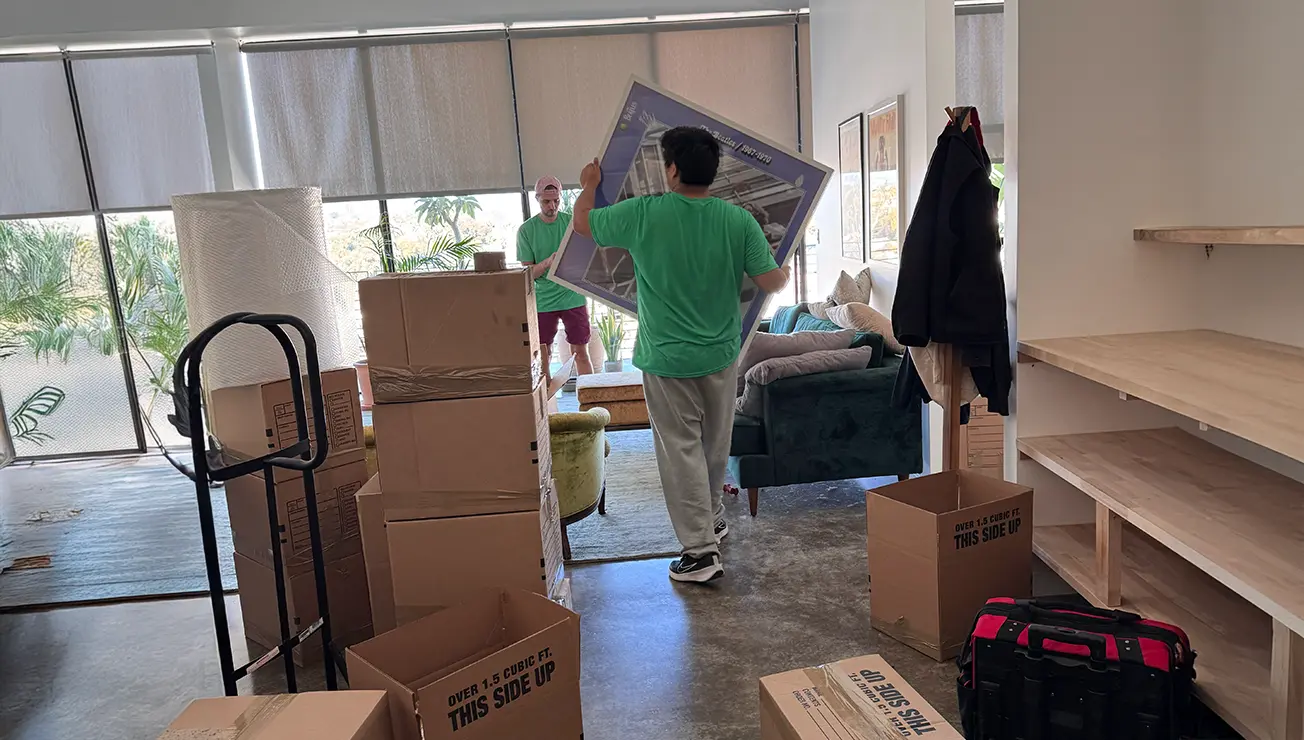
Most people spend significant time choosing a moving company and almost no time thinking about boxes. That’s understandable, because boxes seem like the simple part. You just need something to put your stuff in, right?
Not quite. The box you choose directly affects whether your TV makes it to the new place intact, whether your dishes survive the drive, and whether the crew can load the truck efficiently without half the stack collapsing. The box itself is doing real structural work, and the wrong choice creates problems that no amount of careful wrapping can fully fix.
Knowing where to get moving boxes (and which type you actually need) is worth figuring out before packing day, not during it. This guide covers box types, quantities, where to buy, and how to keep costs reasonable without cutting corners on what actually matters.
Moving Box Types & Sizes (and What Goes in Each)
The most common packing mistake isn’t wrapping fragile items incorrectly. It’s using whatever box is available instead of the right type for the job. Choosing the best moving boxes starts with simply matching the box to what goes inside it.
Here’s the core reference:
| Box Type | Size | Best For |
| Small moving boxes | Small | Books, dishes, tools |
| Medium moving box | Medium | Kitchenware, decor, toys |
| Large moving boxes | Large | Pillows, blankets, light bulky items |
| Wardrobe boxes for moving | Special | Clothes on hangers |
| Dish pack | Reinforced | Glassware and ceramics |
| TV/mirror box | Special | TVs, mirrors, paintings |
A few details worth knowing about each category:
- Small moving boxes are the workhorses of most moves. Anything heavy (books, tools, canned goods, power tools) goes in small boxes. The instinct to use a large box for everything is common, but a large box full of books can easily hit 60+ pounds. That’s a safety hazard for the movers and a structural failure waiting to happen.
- Large moving boxes are for volume, not weight. Pillows, blankets, comforters, lightweight lampshades, stuffed animals – anything that takes up space without much mass. Used correctly, large moving boxes fill the truck efficiently without creating dangerous lifting situations on moving day.
- Wardrobe boxes for moving have an interior hanging bar so your clothes travel on their hangers and arrive ready to hang in the new place. For a wardrobe of 30+ items, a wardrobe box effectively packs itself.
Dish packs have reinforced walls and interior dividers specifically for glass and ceramics. TV boxes have shaped foam corner protection. These specialty formats exist because standard cardboard genuinely can’t match their protection for specific high-risk items.
Understanding where to get moving boxes in these specialized formats is an important part of planning a well-protected move.
Why the Right Box Prevents Damage
There’s a persistent belief that any box will work for moving, as long as you wrap things carefully. In practice, the box itself handles much of the protective work, and the difference between single-wall and double-wall cardboard is the clearest example of why.
Single-wall cardboard has one layer of corrugated material between two flat sheets. It works fine for light items in short local moves. Double-wall cardboard has two corrugated layers, significantly higher crush resistance, and better impact absorption. For heavy items, long distances, or anything you’d genuinely regret losing, double-wall is worth the modest price difference.
A few other structural points that matter in practice:
- Weight limits are real. Every box has a maximum safe load. Going over it doesn’t just risk the box; it creates a handling problem and can injure movers. Keeping heavy items in properly sized small moving boxes makes loads manageable and reduces the chance of a failure mid-carry.
- Stacking stability. Identical boxes stack evenly. Mixed sizes leave gaps and create unstable columns that shift during the drive. When the best moving boxes used throughout a load share consistent dimensions, the crew can build tight, stable configurations that hold position in transit.
- Internal movement. A box sized correctly for its contents, filled to around 90% capacity with padding on top, limits how much items shift during transport. Vibration during driving creates cumulative low-level impacts. The right box minimizes that movement from the start.
How Many Boxes Will You Need?
The most common mistake here isn’t overestimating – it’s underestimating and making an emergency supply run in the middle of packing. A few extra boxes cost almost nothing compared to that kind of delay.
Here’s a working reference by home size:
| Home Size | Small boxes | Medium boxes | Large boxes |
| Studio | 10-15 | 10-15 | 5-10 |
| 1-Bedroom | 15-25 | 15-20 | 10-15 |
| 2-Bedroom | 25-35 | 20-30 | 15-20 |
| 3-Bedroom | 35-50 | 30-40 | 20-30 |
These are averages. The real number depends on how long you’ve lived there, how much you’ve accumulated, and whether you’re taking everything. A minimalist 1-bedroom might need fewer boxes than a packed studio. Buy in the middle of the range and keep the receipt.
The principle is: heavy items in small moving boxes, lightweight, bulky items in large moving boxes, and medium boxes for everything in between. Don’t try to standardize on one size; it makes loading harder and creates unnecessary damage risk.
If you’re booking with Next Moving, the virtual quote process includes a materials estimate for your home size, which takes the guesswork out of quantities before you buy anything.
Where to Get Moving Boxes: Best Places to Buy
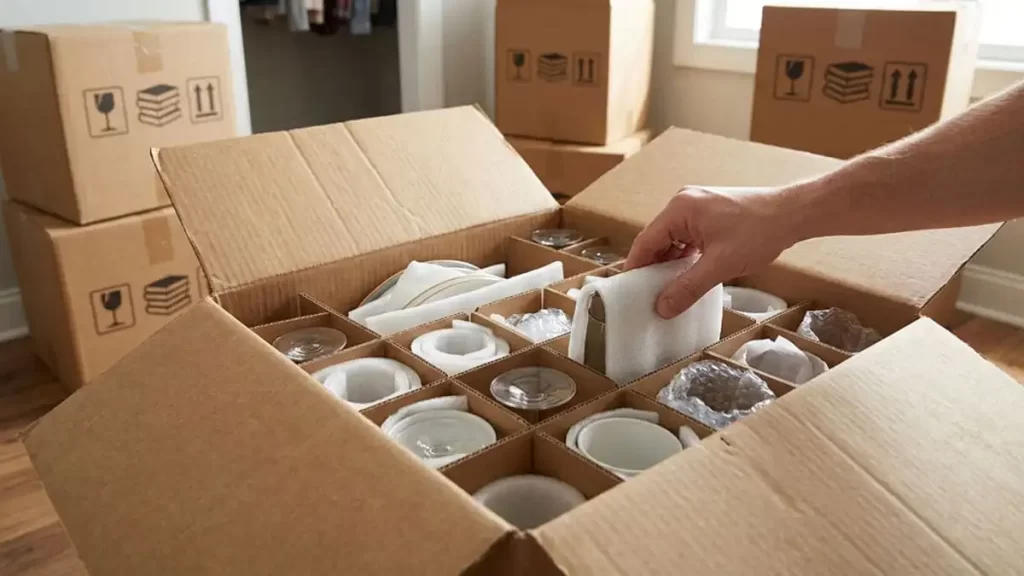
Where to get moving boxes in the right types and quantities depends on your timeline, budget, and what you need.
Here’s an honest breakdown of the main options:
- Your moving company. The most convenient option when you’re booking a professional service. Next Moving offers packing materials as part of full-service moves – boxes arrive with the crew, everything is sized to work together, and the team takes liability for anything they pack. Local moves currently include 15% off packing materials, making this more competitive than many expect.
- Walmart moving boxes are widely available and reasonably priced for standard needs. Consistent dimensions, decent quality for clothes, kitchen items, and general household items. Not specialized, but accessible and sufficient for the basics.
- Target moving boxes are similar in availability and price range. Good for a last-minute supplement when you realize mid-pack that you need more medium boxes. Selection is more limited than dedicated moving suppliers, especially for specialty formats.
- Moving and storage supply stores (U-Haul locations, Public Storage retail counters) carry the full range of specialty formats (dish packs, wardrobe boxes, TV boxes) that big-box retail typically doesn’t stock.
- Online retailers offer the widest selection and often the best pricing on bundle kits. The main variable is delivery timing; if you’re packing this weekend, ordering on Tuesday is fine.
The best place to buy moving boxes for most people is either through their moving company (for convenience and matched materials) or online in a bundle kit (for selection and value). The best place to buy moving boxes ultimately depends on your timeline, but planning a week opens the most options at the best prices.
Knowing where to get moving boxes in the specific formats you need is more important than finding the absolute lowest per-box price.
Cheapest Moving Boxes Without Risking Your Stuff
Budget matters, and there are legitimate ways to reduce packing costs without risking your belongings.
The cheapest moving boxes that are actually safe share a few consistent characteristics: they’re new (not used), meet standard weight ratings, and come in consistent dimensions. “Cheap” and “used” are different categories of risk. New budget boxes from a reputable supplier are often perfectly fine. Used grocery store boxes are a different conversation entirely.
The cheapest place to buy moving boxes without compromising quality is typically an online bundle kit sized for your home type. Bundles for 1-bedroom and 2-bedroom apartments package small, medium, and large boxes together at a total price that’s noticeably cheaper than buying each type separately. For a one-bedroom, a well-priced kit usually runs $30-$55.
A few practical ways to stretch the packing budget:
- Buy kits over individual boxes. Pre-sized bundles cost less per box and ensure you have the right mix from the start, rather than over-buying one size and running short on another.
- Use affordable materials strategically. Standard packing paper does most of the protection work for dishes and glassware. You don’t need premium bubble wrap for every item; reserve it for the genuinely fragile pieces that need it most.
- Skip specialty boxes where they’re not justified. A TV box is worth buying. A dedicated lamp box for a $30 lamp probably isn’t. Prioritize specialty formats for high-value, high-risk items and use standard boxes for everything else.
The cheapest moving boxes that reliably protect your things are new, consistent in size, properly rated, and loaded within their weight limits. Any savings from going cheaper than that usually get canceled out by one broken item.
Moving Boxes FAQ
Where is the best place to buy moving boxes?
Depends on the timeline and what you need. For specialty boxes and full-service convenience, your moving company is the easiest option. For cost-conscious planning with a week of lead time, online bundle kits offer the best overall value. Walmart moving boxes and Target moving boxes are solid fallbacks for standard sizes when you need something quickly or want to top off your supply mid-pack.
What size moving boxes do I need?
Heavy items always go in small moving boxes – books, tools, dishes, hardware. Large moving boxes are for lightweight, bulky things: pillows, blankets, comforters. Medium fills everything in between. Matching box size to item weight is the single most important sizing decision you’ll make.
Are wardrobe boxes worth it?
For clothes you actually wear regularly, yes. Wardrobe boxes for moving let clothing travel on hangers and arrive unwrinkled and ready to hang. For a full wardrobe, the time saved on folding, packing, unfolding, and re-hanging makes the box cost easy to justify.
What are the cheapest moving boxes that are still safe?
New bundle kits from online suppliers, sized for your apartment. Avoid used boxes for anything fragile or heavy. The best moving boxes at a budget price are new, right-sized, and loaded within their rated capacity – that combination handles most moves safely without unnecessary cost.
Common questions
How Many Boxes Will You Need?
The most common mistake here isn’t overestimating - it’s underestimating and making an emergency supply run in the middle of packing. A few extra boxes cost almost nothing compared to that kind of delay. Here’s a working reference by home size: Home SizeSmall boxesMedium boxesLarge boxesStudio10-1510-155-101-Bedroom15-2515-2010-152-Bedroom25-3520-3015-203-Bedroom35-5030-4020-30 These are averages.
Why the Right Box Prevents Damage?
There’s a persistent belief that any box will work for moving, as long as you wrap things carefully. In practice, the box itself handles much of the protective work, and the difference between single-wall and double-wall cardboard is the clearest example of why. Single-wall cardboard has one layer of corrugated material between two flat sheets. It works fine for light items in short local moves.
Where to Get Moving Boxes: Best Places to Buy?
Where to get moving boxes in the right types and quantities depends on your timeline, budget, and what you need. Here’s an honest breakdown of the main options: Your moving company. The most convenient option when you’re booking a professional service. Next Moving offers packing materials as part of full-service moves - boxes arrive with the crew, everything is sized to work together, and the team takes liability for anything they pack.

