
Loading a Moving Truck: Why DIY Loading Goes Wrong (and the Pro Alternative)

How to load a moving truck is one of those questions that seems obvious until you’re standing in front of a 20-foot truck at 7 am with a sectional sofa and three friends who’ve never done this before. By then, the planning window is closed.
Truck loading is genuinely skilled work. The physical part of lifting and carrying is what most people picture, but the decision-making is where most DIY moves get expensive: what order things go in, how weight sits across the floor, and how to secure cargo so it doesn’t shift at highway speed.
Want to know what kinds of problems actually arise in practice? What are the real costs, and in what situations does professional loading assistance prove to be more cost-effective than initial estimates suggest? We’ve been working in this field for a long time and know exactly how to handle it.
The DIY Route: Renting and Loading a Truck Yourself
Local moving truck rental is almost always the first thing people price out when they’re trying to keep moving costs down. Rent a truck, call a few friends, spend a Saturday. On paper, the numbers look manageable. But, in practice, the gap between the rental quote and the actual cost is wider than most people expect.
Local moving truck rental covers the vehicle. It doesn’t include moving blankets, furniture dollies, appliance straps, or hand trucks. Every piece of equipment is an add-on rental, and the per-item fees add up quickly. Then there’s fuel: large rental trucks consume significantly more than a personal vehicle, especially in stop-and-go traffic or on longer routes with multiple trips.
Picking the right truck size is a challenge in itself. Too small and you’re making multiple trips, multiplying the fuel and time cost. Too large items have places to shift inside the box, which is exactly what causes damage during transit. Making that call correctly on a first move, under time pressure, isn’t as simple as it looks.
Then there’s the physical reality of loading trucks without professional equipment. A full apartment of furniture includes bed frames, dressers, appliances, a couch that’s heavier than it looks, and dozens of boxes. Most people underestimate how many hours this actually takes and how much physical effort is involved. By the third or fourth hour, fatigue sets in. That’s when technique breaks down, shortcuts get taken, and damage happens.
How to load a moving truck correctly is something professional crews learn through repetition across hundreds of moves. Friends helping on a Saturday are figuring it out in real time, on furniture you can’t replace.
Why DIY Truck Loading Goes Wrong
The biggest loading problems don’t happen during the carry. They happen after the truck starts moving.
An improperly loaded truck is unstable in ways that aren’t visible from the outside. Heavy items loaded too high raise the truck’s center of gravity. Items placed without restraint slide freely during acceleration, hard braking, and turns. A single unsecured dresser can damage everything around it inside a closed box, and you won’t discover it until you’re unloading at the other end.
How to load a moving truck correctly requires understanding a few principles that most people learn the hard way.
Weight distribution is more important than packing efficiency. The heaviest items (appliances, dressers, filing cabinets, bookshelves) should be placed against the front wall at floor level and loaded first. Keeping the mass low and forward improves the truck’s handling on the road. Heavy items loaded in the rear or stacked high create handling problems that are noticeable even for experienced drivers.
Securing cargo is important. Straps attach to anchor points built into the truck walls. Boxes stacked without restraint will shift on any significant turn or stop, and the cascade of collapsing stacks damages both the boxes and everything underneath them. This is one of the most common and most preventable causes of moving damage.
How to pack a moving truck for fragile items follows a different logic. Heavier boxes always go on the bottom. Fragile items ride on top. Dishes and glassware pack and travel better standing vertically rather than stacked flat. They’re structurally stronger that way and less likely to crack under pressure. Most broken dishes from a move weren’t packed wrong; they were loaded wrong.
The truck loading sequence also matters for unloading efficiency. Whatever goes into the last room at the destination should go onto the truck first. If the living room furniture ends up buried behind the kitchen boxes, unloading becomes a puzzle that takes twice as long.
At Next Moving, crews average 3.7 years of experience specifically in this sequence logic. They’ve moved enough households to recognize loading mistakes before they happen, which is why the company’s damage rate holds at 0.1%.
The Hidden Costs: Damage, Injury & Truck Insurance
The financial argument for DIY loading is almost always the starting point. It rarely survives a complete accounting.
Moving truck insurance is the first item most renters don’t fully understand before signing. Basic rental coverage protects the truck itself from collision damage. It does not cover your belongings. Personal auto insurance policies typically don’t extend to rented moving trucks.
Cargo protection, if available at all, is an add-on with limited scope. If the TV breaks because it was loaded and shifted in transit, that’s generally not covered by the standard rental agreement.
Furniture damage is where the savings disappear fastest. A cracked drawer front, a gouged tabletop, a dented appliance. Individually, these seem minor. A few of them in a single move, and you’re looking at repair or replacement costs that exceed what professional loading truck help would have cost from the start.
Injury is the most underestimated financial risk in DIY moving. Lower back injuries from lifting technique mistakes are extremely common. A few physical therapy appointments, or any lost work time, and the savings from skipping a professional crew are gone. This happens consistently, not occasionally, and most of the time it happens on the last few pieces when everyone is tired and careful technique has given way to “just get it done.”
Beyond damage and injury, there is time. A professional crew loads a full apartment faster than a group of untrained helpers. When you add up equipment rental, fuel, the realistic value of your time, and any damage that occurs, the actual cost difference between DIY and help loading moving truck service is much smaller than the upfront quotes suggest.
The Pro Alternative: Full-Service Movers & Loading Help
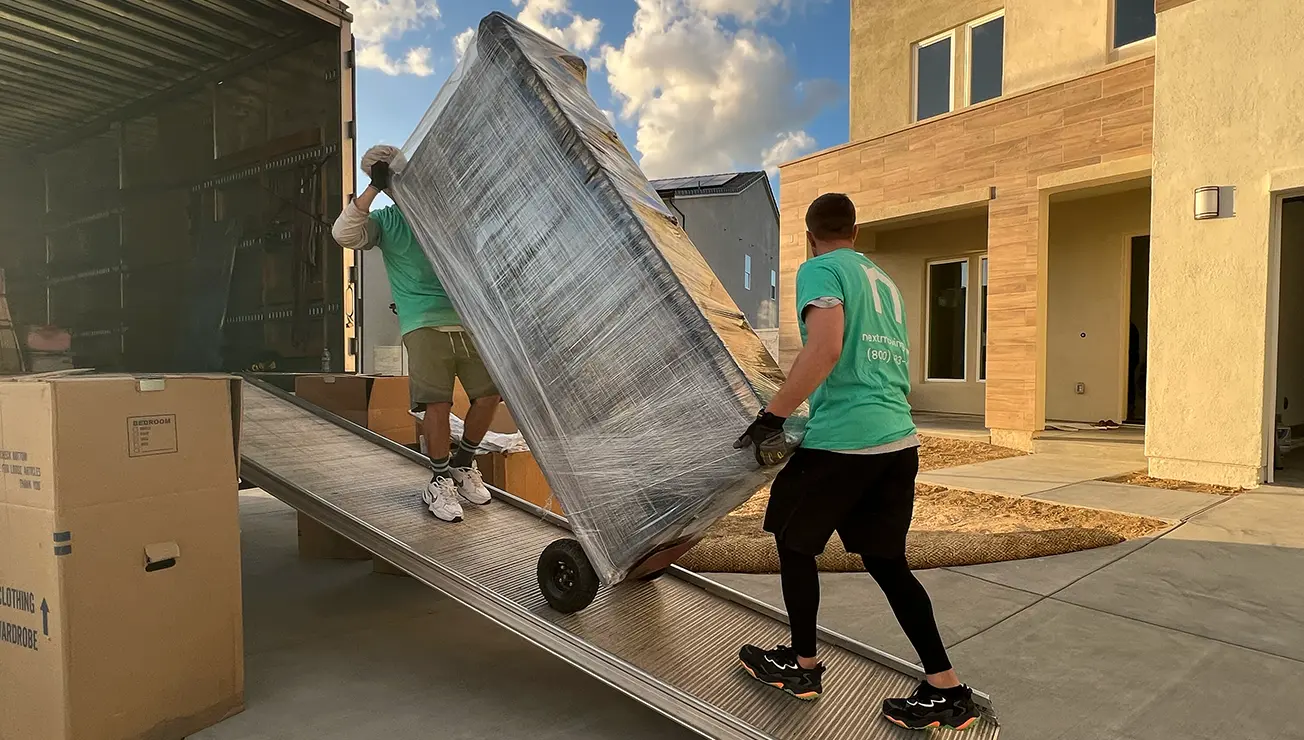
The most complete alternative is full-service moving: a licensed carrier handles packing, loading the truck, transport, and delivery. You don’t lift anything, and the carrier takes on liability for what they move. For larger households or anyone moving high-value items, this is the most predictable and lowest-risk option available.
For people who’ve already rented a truck or want to manage their own transportation, help loading a moving truck is available as a standalone service. You provide the vehicle. A professional crew loads and secures it correctly. This arrangement is common and keeps your transportation cost while removing the physical and damage risk from the equation.
Truck loading help is especially valuable for households with specialty items: a piano, a safe, large appliances, or oversized furniture pieces. These items require specific techniques, the right equipment, and experience with their behavior during transport. Improvising with friends is where the most expensive mistakes in moving consistently happen.
Moving truck loading help also covers the parts most DIY loaders miss entirely: the cargo-securing phase. Blanket-wrapping furniture properly, attaching tie-downs to the right anchor points, and filling gaps in the load to prevent shifting. None of this is intuitive, and skipping it is what causes damage in transit on an otherwise careful move.
Truck loading help from a professional crew takes significantly less time than a self-organized loading session. On an hourly basis for a full household, the labor cost of professional help is often comparable to the time cost of doing it yourself, without the risk of sitting on your side.
Next Moving offers help loading the moving truck as part of both full-service and partial-service arrangements. The entire booking process runs online: see exact pricing, confirm the date, and pay a deposit without a phone call. If you’ve rented a truck and need a professional crew to load it correctly, that service is straightforward to arrange and available 24/7 through the website.
Truck Loading FAQ
How to load a moving truck properly?
Heavy items load first against the cab wall at floor level: appliances, dressers, filing cabinets, bookshelves. Medium-weight boxes fill in next, stacked tightly and strapped. Fragile items ride on top. Everything gets secured with straps to the truck’s anchor points. Nothing should shift freely during normal driving.
How to pack a moving truck for a long trip?
How to pack a moving truck for a distance means treating cargo securing more seriously than you would for a short local move. Highway vibration over hours works on loose cargo in ways a 20-minute trip doesn’t. Fill every gap with soft items like pillows and blankets. Strap items at multiple anchor points. Dishes travel standing vertically, padded between layers. Don’t leave open vertical space that allows anything tall to tip.
Can I hire someone just to load my rental truck?
Yes. Partial-service loading is a standard offering. You rent the truck, and a professional crew loads and secures it correctly. This is often the most cost-effective setup for people who want professional results without full-service pricing. Next Moving offers this as a bookable service directly through the website.
Does moving truck rental insurance cover my belongings?
Standard moving truck insurance from rental companies covers the vehicle, not your cargo. Your belongings are typically unprotected unless you purchase additional cargo coverage separately. Read the coverage terms carefully before you sign.
Is it cheaper to load a truck yourself or hire movers?
The upfront rental cost is lower. Once you factor in equipment, fuel, time, and any damage that occurs, the gap closes significantly. For households with furniture worth protecting, professional loading truck service almost always costs less than the damage it prevents.
Common questions
Why DIY Truck Loading Goes Wrong?
The biggest loading problems don’t happen during the carry. They happen after the truck starts moving. An improperly loaded truck is unstable in ways that aren’t visible from the outside. Heavy items loaded too high raise the truck’s center of gravity. Items placed without restraint slide freely during acceleration, hard braking, and turns. A single unsecured dresser can damage everything around it inside a closed box, and you won’t discover it until you’re unloading at the other end.

