
Free Moving Boxes: Why “Free” Often Costs You More
Saving money on a move makes sense. Nobody wants to spend more than they have to, especially when the actual list of moving expenses is already longer than expected. So when people realize they can find free moving boxes at grocery stores, in online groups, or at offices, it feels like a genuinely smart shortcut.
Sometimes it is. But more often, it’s not, and the reasons are worth understanding before you spend three evenings driving around collecting random cardboard.
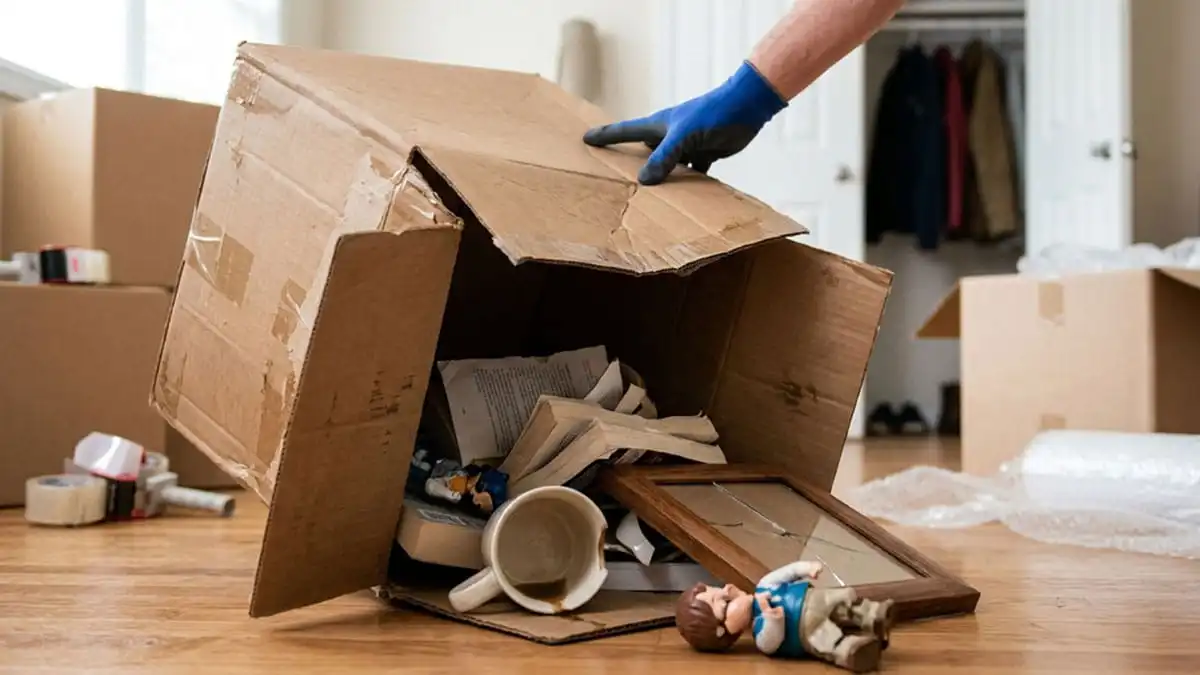
The core problem: boxes are the container for everything you own during one of the more stressful days of your life. When a box fails – tears at the bottom, collapses on the staircase, or arrives smelling like a supermarket storage room – whatever’s inside pays the price. A cracked TV or a broken set of dishes quickly wipes out any savings from sourcing “free” packaging.
This isn’t an argument against being resourceful. It’s an argument for being realistic about what you’re actually getting.
Where Do People Get Free Moving Boxes?
There’s a whole ecosystem of free moving boxes near me that people find with a quick search. The most common:
- Grocery and liquor stores. High cardboard volume moves through these places every day. Liquor store boxes are well-constructed (they’re built for heavy glass bottles) and are among the better free options. Grocery boxes are more of a gamble when it comes to quality and odor.
- Facebook Marketplace and Craigslist. People who’ve recently moved often list their boxes for free pickup. Because the boxes were used for moving to begin with, they’re typically more suitable than whatever was sitting in a store’s back room.
- Buy Nothing groups. Hyperlocal and often surprisingly productive. Someone three blocks away may have a full set of boxes from a recent move, still in good shape.
- Offices and business centers. Clean, dry, and often uniform sizes. Office paper boxes are sturdy and stack well; this is arguably the best free option if you can access them.
- Recycling areas. People do this, but it’s the weakest option. Moisture damage, unknown contents, and possible pest exposure make these a genuine risk.
Knowing where to get moving boxes for free is only half the equation. The other half is understanding what you’re actually getting and whether the condition of those boxes is compatible with what you’re putting in them.
Why Free Moving Boxes Often Cost You More
Free boxes for moving have a surface appeal that makes sense. You’re already paying for movers, deposits, utility transfers, and everything else. Cutting the box budget to zero feels like a clear win.
The problem is that math doesn’t always hold.
- Size inconsistency. Random free boxes come in random sizes. When loading a truck, uniform boxes stack efficiently and stay stable. Mixed sizes leave gaps, create unstable configurations, and force movers to spend extra time figuring out how to fit things together. On an hourly rate, that time adds up.
- Structural weakness. Used cardboard has already been under load. The fibers lose integrity after one use cycle – sometimes more. A box that looks solid when empty can fail under 40 pounds of books or dishes, especially on stairs.
- Damage risk. One broken item typically costs more than a full set of new boxes. A large TV, a ceramic lamp, a glass-topped piece of furniture – any of these damaged during a move costs more to replace than the $40-$60 you’d spend on quality packing materials.
- Pest exposure. Cardboard from grocery stores can harbor cockroach eggs, food residue, and other contaminants. Pack your things in infested boxes, and the problem moves with you.
Free packing supplies from random sources look like savings until one of these things happens. And when it does, the savings disappear quickly.
The Hidden Risk: Pests, Mold & Weak Cardboard
Of all the downsides to free-moving boxes, the moisture and pest risk is the one people least expect and most regret.
Cardboard is porous. It absorbs moisture from floors, from humidity, from whatever environment it’s been sitting in. Once the structural fibers get wet, they weaken – sometimes visibly, sometimes not until the bottom gives way under weight mid-carry. Grocery and warehouse boxes are especially prone to this: loading docks, back rooms, refrigeration-adjacent storage. Moisture is a constant in those environments.
The pest issue is real and underappreciated. Cockroaches are drawn to cardboard – it retains warmth and, in grocery environments, often carries food residue. Moving with infested boxes isn’t just unpleasant; depending on where you’re moving, it can create a problem that takes months and serious money to resolve. This is actually one of the situations covered in Next Moving’s service terms – clients are asked to disclose pest-related hazards in advance because contaminated boxes can affect the entire crew and their equipment.
Old boxes also absorb and transfer odors. Clothes and bedding packed in boxes that have spent time near food products can arrive noticeably off – something you typically only discover during unpacking.
Free boxes for moving can work in the right situations: non-fragile items, well-inspected cardboard in genuinely good condition. But for anything valuable, the risk calculation rarely comes out in favor of free.
Time Is a Cost, Too
Here’s the part of the free moving boxes near me search that almost nobody factors in: the actual time it takes.
Finding a usable set of free boxes isn’t a one-stop thing. It usually means checking multiple stores, browsing online listings, coordinating pickups from strangers, and sorting through what you’ve collected to figure out what’s actually safe to use. For most people, this becomes two or three evenings (sometimes more) of effort that feels productive but isn’t really advancing the move.
Then there’s the secondary time cost: reinforcing weak boxes with extra tape, dealing with boxes that fail mid-pack and need to be replaced, and sorting through non-standard sizes to figure out how to organize and load them.
Knowing where to get free moving boxes across multiple locations might get you a full set of materials. Still, the hours spent are hours not spent packing efficiently, handling logistics, or just resting before a physically demanding day.
Free packing supplies come with a built-in time cost that most people don’t factor in upfront. Whether that cost is worth it depends on your situation. Small move, plenty of time, sturdy boxes available nearby? The free route can make sense. Tight timeline, fragile items, or anything you’d genuinely regret damaging? The math shifts.
What to Use Instead (Smart, Low-Cost Options)
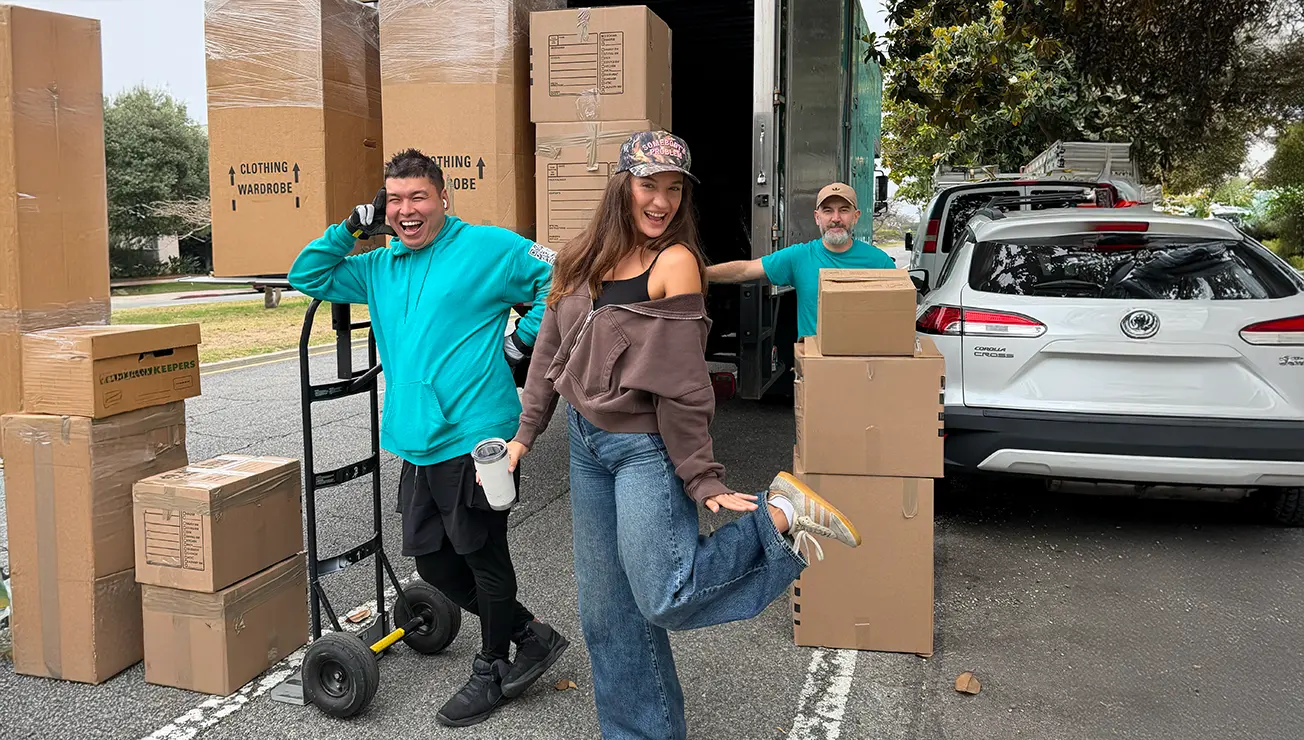
Professional packing materials don’t have to be expensive. Here’s what actually works:
- New standard boxes. Uniform size, fresh cardboard, consistent structural strength. They stack cleanly in a truck, which means less shifting and fewer damaged items in transit. A full set of new boxes for a one-bedroom typically runs $30-$60.
- Wardrobe boxes. Built with an interior hanging bar. Clothes go in on hangers, come out on hangers. No folding, no creasing, no morning-after-moving scramble to find your work clothes.
- TV and electronics boxes. Designed with corner reinforcement and appropriate dimensions for large screens. The cost of a purpose-built TV box is a fraction of what a screen replacement costs.
- Bubble wrap and cheap packing paper. These don’t need to be premium products to do their job. Dishes wrapped in packing paper arrive intact. Bubble wrap handles vibration during transport. Both are inexpensive and genuinely effective.
Many moving companies include materials as part of full-service packages, or offer them at cost when you book a move. At Next Moving, packing can be added directly to your service – the team provides the proper materials, handles the wrapping, and assumes liability for anything they pack. For clients who have used professionally packed moves, the 0.1% damage rate speaks to how much quality materials and trained technique actually matter.
If you’re set on the free route, office paper boxes are the most reliable option available, liquor store boxes are solid for small items with weight, and Buy Nothing groups are a better source than recycling areas. Whatever you use, spend five seconds on each box before you rely on it – press the bottom firmly, check the corners, smell the inside. Five seconds of inspection can prevent a genuinely bad moment on moving day.
Free Moving Boxes FAQ
Where can I get free moving boxes near me?
The best options are offices (clean, uniform, sturdy construction), liquor stores (built for weight), and local Buy Nothing groups or Facebook Marketplace. Skip recycling areas and anything showing moisture damage or unusual smells.
Where to get free moving boxes?
Office paper boxes are the best free option – uniform size, strong cardboard, typically stored in dry environments. Liquor store boxes are a reliable second choice for small to medium items.
Are free moving boxes safe to use?
For light, non-fragile items in boxes that pass a visual inspection: yes. For electronics, dishes, clothing, or anything valuable: the moisture and structural risks usually aren’t worth it.
How many boxes do I need for a move?
A studio typically needs 15-25 boxes. A one-bedroom: 20-40. A two-bedroom: 40-60. A moving company can give you a more accurate estimate based on your specific situation – something Next Moving factors into its virtual quotes.
Is it cheaper to buy boxes or get them free?
Free is cheaper upfront. But when you factor in time spent sourcing them, tape reinforcement, and the risk of something breaking, the math often comes out close – or in favor of buying. For a full home move, $50-$80 in new boxes is usually the right call.
Common questions
Where Do People Get Free Moving Boxes?
There’s a whole ecosystem of free moving boxes near me that people find with a quick search. The most common: Grocery and liquor stores. High cardboard volume moves through these places every day. Liquor store boxes are well-constructed (they’re built for heavy glass bottles) and are among the better free options. Grocery boxes are more of a gamble when it comes to quality and odor. Facebook Marketplace and Craigslist. People who’ve recently moved often list their boxes for free pickup.
Why Free Moving Boxes Often Cost You More?
Free boxes for moving have a surface appeal that makes sense. You’re already paying for movers, deposits, utility transfers, and everything else. Cutting the box budget to zero feels like a clear win. The problem is that math doesn’t always hold. Size inconsistency. Random free boxes come in random sizes. When loading a truck, uniform boxes stack efficiently and stay stable.
What to Use Instead (Smart, Low-Cost Options)?
Professional packing materials don’t have to be expensive. Here’s what actually works: New standard boxes. Uniform size, fresh cardboard, consistent structural strength. They stack cleanly in a truck, which means less shifting and fewer damaged items in transit. A full set of new boxes for a one-bedroom typically runs $30-$60. Wardrobe boxes. Built with an interior hanging bar. Clothes go in on hangers, come out on hangers.

