
Packing Fragile Items: The Real Risk of DIY (Glassware, TV, Electronics)
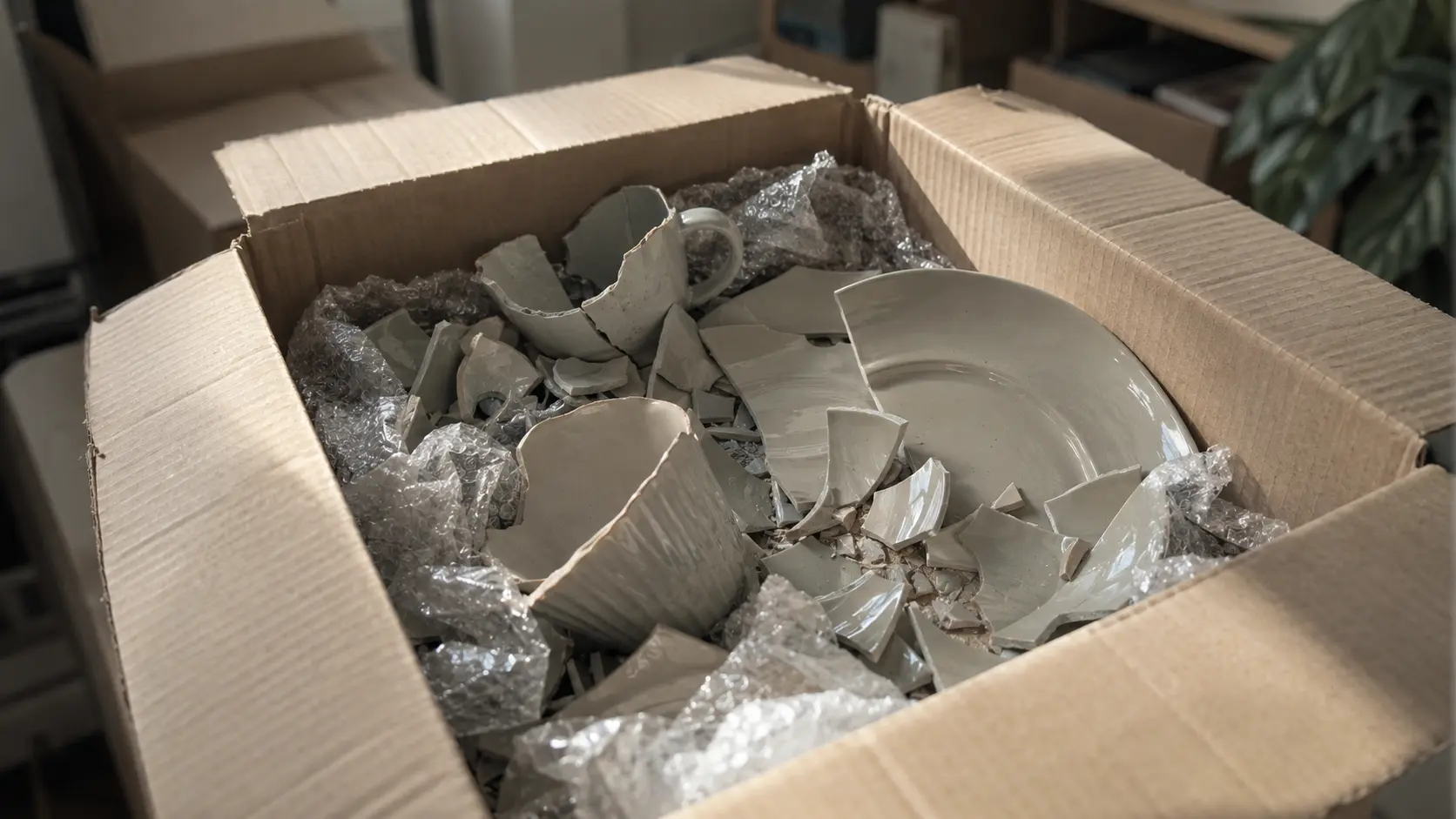
Things break during moves. Not because of carelessness exactly, but because most people don’t fully understand what happens to objects inside a moving box at highway speed. Glass that survived decades on a shelf can crack in transit because of forces that have nothing to do with dropping it.
Packing fragile items for moving correctly isn’t about loosely wrapping them in newspaper and hoping for the best. It requires understanding vibration, void space, load distribution, and the specific vulnerabilities of each item category. Get those right, and almost nothing breaks; but if you do the opposite, the damage bill starts adding up quickly.
Using good packaging requires a structured approach for everyone. Each element has a protective function and does not simply fill the space. So let’s discover where damage actually happens, why DIY approaches consistently fall short, and how to protect glassware, TVs, and electronics specifically.
Why DIY Packing Fails Fragile Items
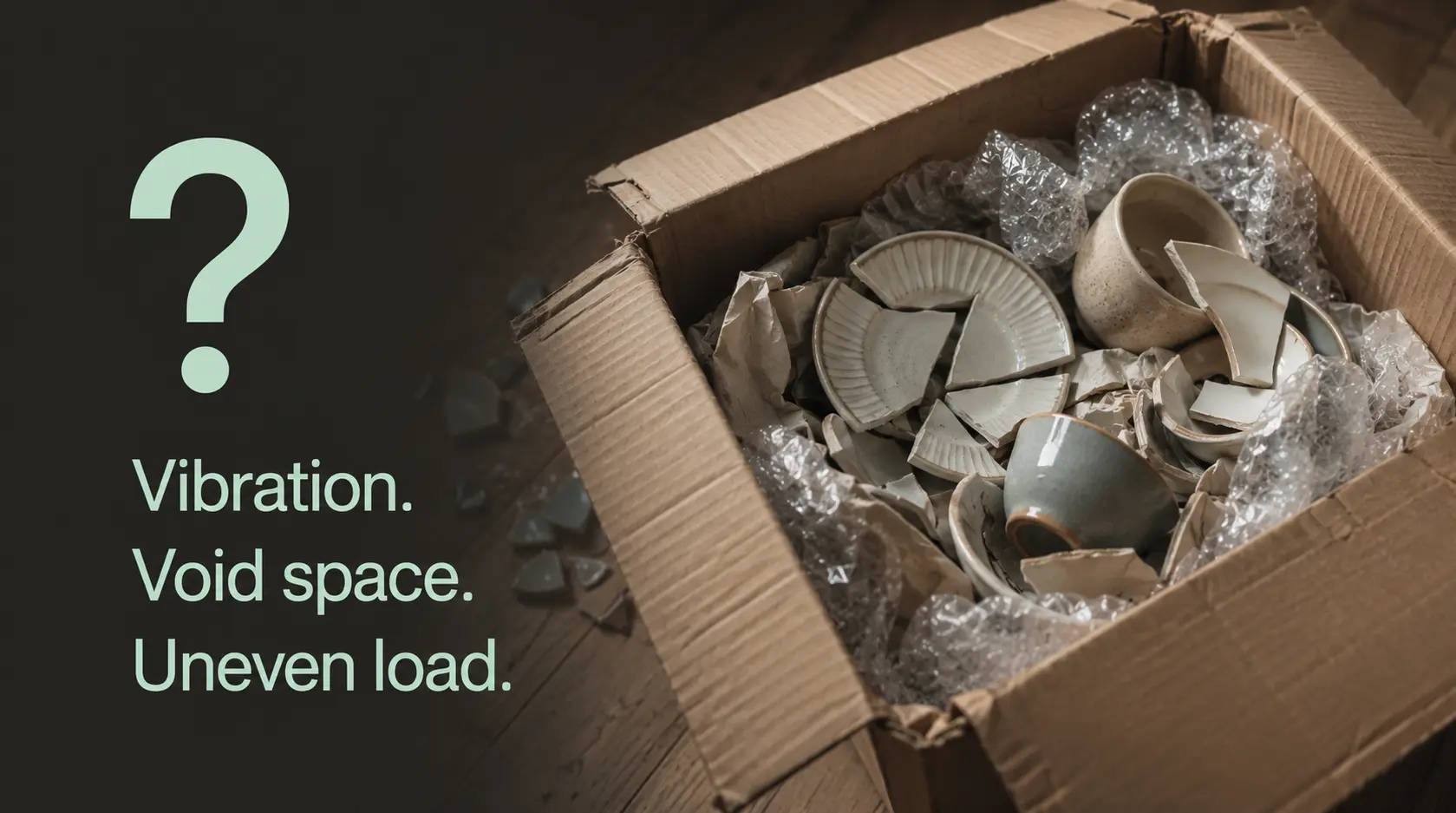
The most common misunderstanding about packing fragile items is that more wrapping automatically means more protection. But trust the professionals from Next Moving, it doesn’t. The material matters, and so does what happens to the space around it.
Three physical factors cause most breakage in transit:
- Vibration. A moving truck produces a constant, low-frequency vibration throughout the entire load. Objects that aren’t packed tight enough vibrate against each other for the duration of the drive, and that sustained contact causes chips, cracks, and internal damage even without any single impact.
- Void space. Empty space inside a box is one of the most dangerous packing mistakes. When there’s room for things to shift, they do. A wine glass that moves half an inch during a hard brake has already made contact with something hard. The damage from void space is more consistent and more widespread than damage from drops.
- Uneven load. Mixing heavy and fragile items in the same box creates continuous downward pressure throughout the drive. For glass and electronics, sustained compression is often as damaging as a sudden impact.
A newspaper is the other common culprit in failed DIY packing. It’s used as a budget substitute for packing paper, but it compresses rapidly under any pressure and stops providing cushioning almost immediately. Once compressed, it does little. Glassware wrapped in newspaper ends up with thin paper between fragile surfaces and hard box walls, and the results are predictable.
Correct packing of fragile items for moving requires a structured approach: the right materials layered in the right combination (at least bubble wrap for fragile items), zero void space, and appropriately sized boxes that maintain their structural integrity under the actual load.
Glassware & Kitchen Items: Where Most Breakage Happens
The kitchen produces the highest damage rate of any room during a move. The combination of fragile materials, irregular shapes, and the sheer number of individual pieces means that packing shortcuts have the most expensive consequences.
How to pack glassware for moving correctly starts with a counterintuitive principle about plates: they don’t stack flat. Flat-stacked plates impose a point load on each plate’s rim due to the weight of the plates above. Over a full drive, that concentrated pressure causes chips along the edge and sometimes full fractures through the plate. Plates pack better standing vertically, like records in a crate, with foam or packing paper between each one. The load is distributed across the entire surface rather than concentrated at the rim.
Stemware is the most consistently damaged category in any kitchen move. The stem is a structural weak point, and without individual cell protection, the glasses knock against each other from the moment the truck starts moving. Cell boxes (also called glass packs) create individual compartments that physically prevent contact between pieces. Without them, you’re relying on gap-filling to do a job it can’t reliably do.
How to pack a kitchen for moving also means managing box weight. Kitchen boxes get heavy fast, especially once you’re adding ceramics and ceramic bakeware alongside glass. Overloaded boxes lose structural integrity at the bottom, which means the cushioning layer protecting the bottom tier of glassware gets compressed flat. The practical weight limit for kitchen boxes is 40 to 50 pounds, and exceeding it means adding another box rather than packing more tightly.
How to pack glassware using a professional technique: wrap each piece individually in packing paper, then add a layer of bubble wrap. Pack bottom-first with a full inch of crumpled paper as a floor cushion. Fill every void with packing paper until nothing shifts when you shake the closed box. If you can feel movement from inside, it’s not ready.
How to pack a kitchen for moving when there’s a large volume: sort by category before you start. Similar items go together. Cast iron doesn’t share a box with wine glasses simply because both came from the kitchen. Size-appropriate boxes for each category, packed to the weight limit, clearly labeled on top and all four sides.
How to pack glassware for moving is where professional packing makes the most visible difference. Next Moving crews use dish-pack boxes with cell inserts as standard for glassware. The damage rate for professionally packed kitchens is significantly lower than for self-packed ones, which is why anything the team packs carries liability coverage. If it breaks, the company covers the cost of the replacement.
TVs & Electronics: High-Value, High-Risk
A flat-screen TV is one of the most frequently damaged items during moves and one of the most consistently packed incorrectly. The screen on a modern flat-panel TV is thin, fragile in ways not obvious from the outside, and prone to developing internal microfractures that only become visible when the screen is powered on.
How to pack a TV for moving correctly comes down to one non-negotiable rule: the screen stays vertical. Horizontal transport allows gravity to exert sustained pressure across the entire panel surface throughout the drive. Even without any external impact, a large TV laid flat on a truck for an hour of highway driving can develop internal cracks that aren’t apparent until you plug it in at the new address.
The original box, if you still have it, is the best option because it’s molded to the TV’s dimensions and includes foam inserts that hold the device in place. Without the original, a purpose-built TV box with foam inserts is the correct replacement. Standard moving boxes don’t hold a TV safely because they don’t fix the device’s position relative to the walls or protect the screen from flexing under external pressure.
How to pack a flat-screen TV for moving without the original packaging: measure the TV first, then purchase a TV box sized to match. Wrap the screen in foam sheeting before placing it in the box. Fill the remaining space with foam or crumpled paper until the TV cannot move in any direction. Seal and label the box clearly with “FRAGILE,” “THIS SIDE UP,” and the screen orientation so no one stacks anything on top.
How to pack a TV for moving also includes the peripherals. Cables, remotes, and mounting hardware should be packed separately in a clearly labeled bag or small box. Cables wrapped around the TV inside the box create pressure points and can damage connectors during transit.
Small electronics follow similar logic: individual wrapping in bubble wrap, no shared boxes with items that have hard edges, and foam fill around any remaining space. For static-sensitive components, anti-static bags add meaningful protection. For high-value equipment such as professional audio gear, cameras, or gaming consoles, professional packing with a documented inventory is worth the cost.
The Best Packing Materials for Fragile Items
The best packing material for fragile items is always a combination rather than a single product. Any approach that relies on a single material to handle all protective work is missing a part of the system.
| Item Type | Recommended Materials |
| Glassware | Packing paper + bubble wrap + dish-pack box |
| Plates | Foam sheets + dish-pack box (vertical) |
| TV | TV box + foam inserts (vertical) |
| Electronics | Bubble wrap + foam, anti-static if needed |
| Kitchen items | Packing paper + dish box |
Now, here’s how to use it correctly:
- Packing paper is the first layer. It prevents surface scratches and stops items from making direct contact with other items or with the box walls. Light, flexible, and easy to crumple into void fill, it’s the right starting point for glass and ceramics.
- Bubble wrap is the second layer for impact absorption. The air chambers absorb shock and vibration that paper can’t handle. Bubble wrap is placed over the packing paper for anything fragile, creating a two-layer system that provides both surface protection and impact energy absorption.
- Foam sheets are for plates and other large, flat items, where bubble wrap’s surface texture creates uneven pressure points. Foam distributes load evenly across the full contact surface, which is exactly what plates need between stacks.
- Dish-pack boxes provide the structure. Their double-wall construction holds up under dense kitchen loads that would compress and fail a standard moving box. Cell inserts inside glass packs physically prevent individual pieces from making contact throughout the move.
The best packing material for fragile items achieves three distinct things simultaneously: surface protection, impact absorption, and movement prevention. If your approach doesn’t address all three, there’s a gap in the system where damage happens.
Packing Fragile Items FAQ
What’s the best way to pack fragile items for moving?
Use packing paper as the first wrap, bubble wrap as the second layer, fill every void with crumpled paper until nothing moves, and use appropriately sized boxes that weigh under 50 pounds. Packing fragile items for moving correctly is more about eliminating void space and layering materials than about the volume of wrapping on each piece.
How do you pack a flat-screen TV for a move?
Vertical only, in a purpose-built TV box with foam inserts that hold the screen in position. Never lay a flat-panel TV horizontally during transport. Label the box clearly so no one flips it during loading or unloading.
What’s the best material for packing glassware?
Packing paper for the initial wrap, bubble wrap for cushioning, and a dish-pack or cell box for structural separation. How to pack glassware for moving safely comes down to treating each piece as an individual item with its own wrap, not as part of a grouped pack that shares protective material.
Is professional packing worth it for fragile items?
For glassware collections, flat screens, audio equipment, and antiques, professional packing of fragile items for moving consistently delivers better results than self-packing under moving pressure. The materials are better, the technique is applied consistently across every item, and anything the team packs at Next Moving carries liability coverage. If something breaks despite professional packing, the replacement cost is covered by the company, not you.
Common questions
Why DIY Packing Fails Fragile Items?
The most common misunderstanding about packing fragile items is that more wrapping automatically means more protection. But trust the professionals from Next Moving, it doesn’t. The material matters, and so does what happens to the space around it. Three physical factors cause most breakage in transit: Vibration. A moving truck produces a constant, low-frequency vibration throughout the entire load.

