
Moving with Cats, Dogs & Other Pets: Why a Pro Move Keeps Them Safe
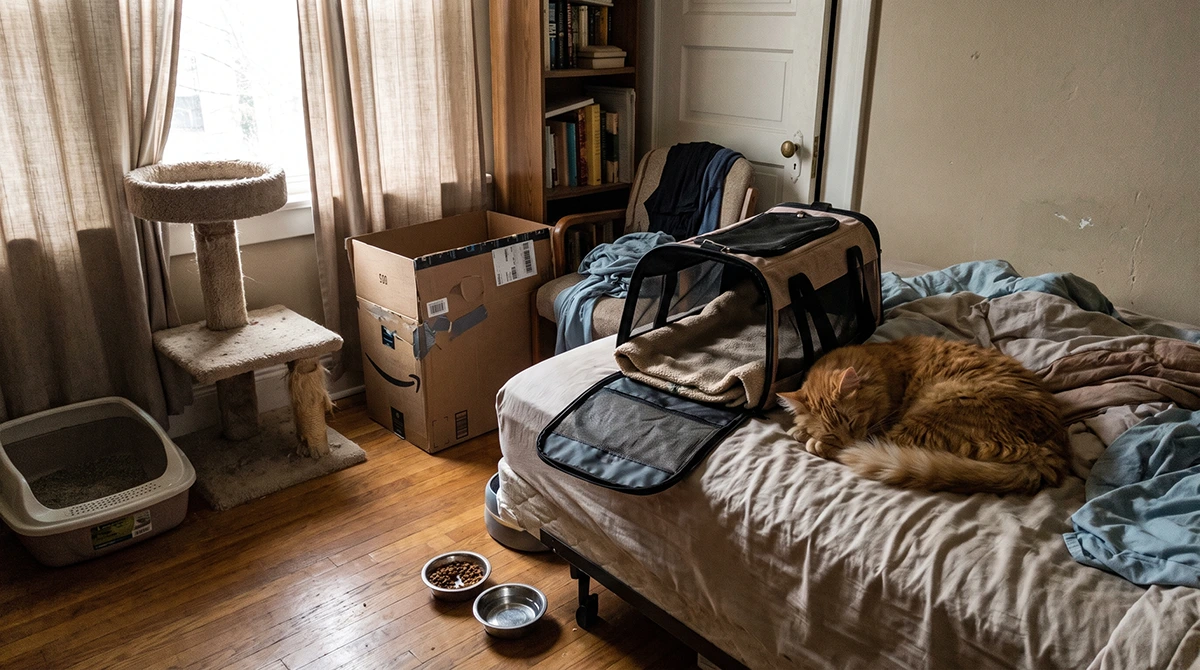
Moving is one of the most stressful events for any household. It takes careful planning, the right packing materials, and, in most cases, a trusted moving company to get everything from point A to point B without damage or chaos. But there’s one part of the process that often gets overlooked until the last minute: moving with pets.
At first, it might seem simple: pack up, load the truck, and go. In reality, moving with animals in the house requires its own plan. Cats, dogs, and other pets don’t understand what’s happening around them, and they react to noise, strangers, and disruption far more strongly than we expect.
A professionally organized move helps take that pressure off pet owners. When the team handling the boxes and furniture works efficiently, there’s simply less time for things to go wrong.
At Next Moving, our crews are trained and background-checked, and a full house is typically loaded in three to four hours, which matters more than people realize when there’s a frightened animal in the next room. Less time spent in chaos means less time for a pet to panic, slip out a door, or get underfoot. Good moving with pets planning is really about keeping both the home and the animal’s wellbeing intact at the same time.
Why Moving Is So Hard on Pets
Moving disrupts something pets rely on more than we do: routine. A dog reads its world through scent and territory markers. A cat treats the home itself as its safety zone. For both, moving day tears that structure apart in a single afternoon – strange sounds, a truck engine outside, unfamiliar people carrying furniture through the door. It’s no surprise that moving with pets ranks among the more stressful parts of relocating for owners who take their animals’ comfort seriously.
The most common risks during a move include:
- Escape. An open door during loading is the single biggest cause of pets going missing. Even a calm animal can bolt at an unfamiliar noise.
- Stress. Constant noise and unfamiliar people create real psychological strain. It can show up as refusing food, restlessness, or even aggression.
- Injuries. Boxes, trolleys, and furniture moving through tight hallways create hazards that a pet can easily wander into.
- Materials. Tape, wrapping film, and packing paper are tempting to chew on, and swallowing them can mean an expensive trip to the vet.
Moving with Cats: How to Do It Right
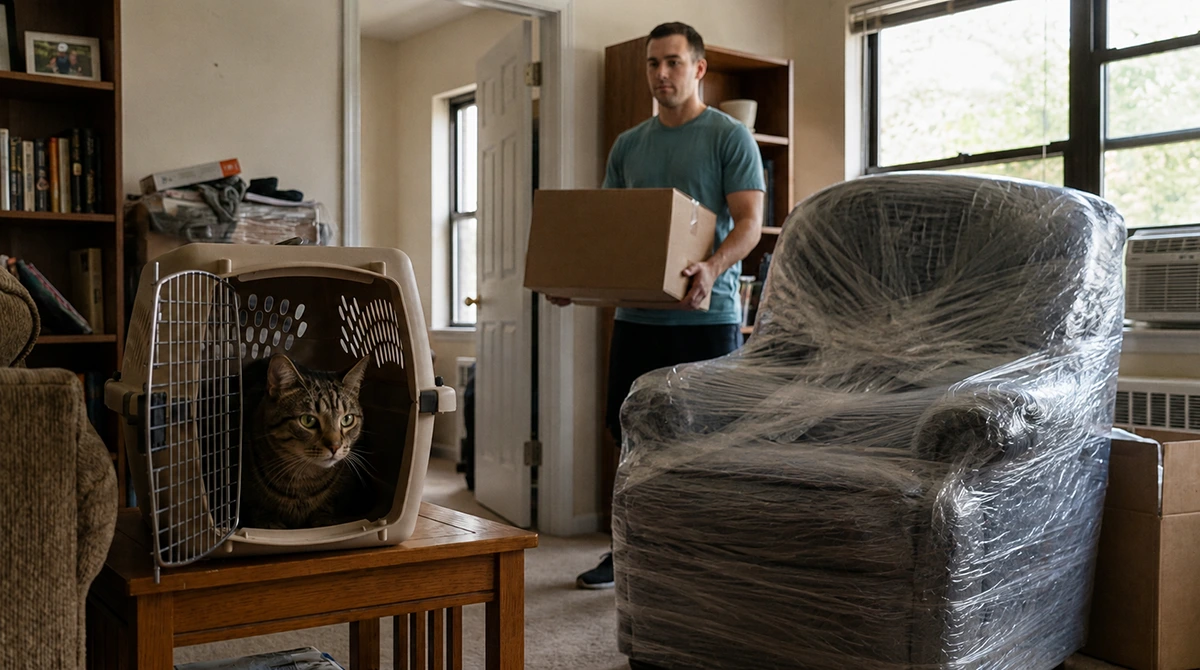
Cats tend to handle relocation worse than dogs do. A dog will usually look to its owner for reassurance; a cat’s instinct is to hide. That’s exactly why so many cats go missing on moving days: they slip into a hiding spot and simply don’t come out when called.
Moving with cats successfully comes down to preparation, not luck. Leave the carrier open at home for weeks before the move, and put treats inside so the cat associates it with something good, not just vet visits. A pre-move check-up is also worth scheduling, so you know your cat is healthy enough for the transition ahead.
On moving day, set up one closed room with a litter tray, water, bowls, and a blanket that already smells like home. Keep the cat in its carrier while the movers are loading, and transport it in your own car, never in the moving truck! Once you arrive, don’t open the whole house at once; give the cat one safe room first. People searching for how to move with a cat without unnecessary stress usually find that this slower, room-by-room approach works best.
A short prep checklist:
- Carrier training. Introduce the carrier weeks in advance, left open with treats or toys inside.
- Safe room. Set one up before the movers arrive, stocked with water, food, a tray, and familiar-smelling items.
- Transport. Always your own car; trucks don’t offer stable temperature or ventilation.
- Adaptation. Let the cat settle into one room for a few days before expanding its territory.
Cat Not Eating After Moving and Other Stress Signs
One of the most common questions after a move is why the cat is not eating after moving, which seems to be the case for the first day or two. In most situations, this is completely normal. A cat skipping meals for the first 24 to 48 hours is showing stress, not illness.
That said, there’s a line between normal adjustment and something that needs a vet visit.
Normal stress signs (24-72 hours):
- Reduced appetite
- Hiding
- Excessive grooming
- Skipping the litter box once or twice
- Sleeping more than usual
Signs that need a vet’s attention:
- No food or water at all for 48+ hours
- Ongoing vomiting or diarrhea
- Persistent lethargy
- Signs of urinary blockage
Keep food available at regular times, even if it’s untouched at first, and set up the litter box in a quiet, low-traffic spot using the same brand your cat is used to. Most cats dealing with not eating after moving are back to a normal appetite within three to five days; patience and a stable routine usually solve it on their own.
Moving with a Dog
Moving with a dog is generally more manageable than moving with a cat, largely because dogs rely on their bond with their owner rather than hiding from the situation entirely. Still, it takes real preparation. Pack a bag with medications, a leash, and vet records well ahead of time, and make sure the microchip and ID tag both have your new address before moving day.
A few things that make a real difference for moving with a dog:
- Routine. Sticking to normal feeding, walking, and rest times gives a dog something predictable to hold onto.
- Safety. Keep the dog away from the loading area while movers are working; it protects the dog and the crew carrying heavy furniture.
- A first-day kit. Pack everything you’ll need immediately after arrival separately, so you’re not digging through boxes.
- Territory check. Walk the new yard yourself before letting the dog off-leash, checking for gaps in fencing or anything hazardous.
Moving with a dog gets noticeably easier when loading is quick and quiet, which is another reason a smooth, professional move matters.
Moving Long Distance with Cats
Moving long distances with cats raises the stakes, since the cat may spend many hours in a carrier. Start preparing weeks ahead, not days. A vet visit before the trip is worth scheduling; if sedation is ever considered, it should only happen under veterinary guidance, since incorrect dosing can be genuinely dangerous.
Choose a hard-sided carrier, since it holds up better through sudden stops and turns than a soft one. Offer water at regular breaks, but avoid opening the carrier in open or unfamiliar areas. If you’re stopping overnight, book pet-friendly accommodation in advance rather than scrambling at the last minute. Owners planning moving long distances with cats almost always find that the extra planning up front prevents the stressful surprises along the way.
How to Help Your Pet Adjust to the New Home
Once you’ve arrived, the real adjustment period begins. People often ask how to help a cat adjust to a new home life without weeks of hiding and stress, and the answer is mostly about patience and consistency. Set up a familiar bed, bowl, and litter tray right away, and keep an eye on behavior changes that might need a vet’s input.
If you’re combining households (moving in together with pets for the first time), introductions should happen gradually and on neutral, calm terms, not all at once on day one.
A few things that help:
- Keep feeding, walking, and rest times consistent from day one.
- Let the animal explore new rooms gradually instead of all at once.
- Stay calm yourself; pets read your behavior as a signal that the new place is safe.
- When combining two households, take the introduction slowly and let it happen at the pet’s pace.
Most owners find that with a steady routine, the answer to how to help a cat adjust to a new home life is really just time; most cats settle in within two to three weeks.
When a Professional Move Keeps Pets Safer
A well-run move directly reduces the risk to your pet, simply because there’s less time for things to go wrong. At Next Moving, our teams are fully licensed and insured, trained, and background-checked, and we also offer storage options if you need extra time between homes. Loading a house typically takes three to four hours with an experienced crew, and that shorter window matters a lot when there’s an anxious animal somewhere in the house:
- Less time loading means less noise, fewer open doors, and fewer chances for something to go wrong.
- While the crew handles the heavy lifting, you’re free to focus entirely on your pet.
- Our virtual estimates mean no last-minute surprises on move day, one less thing to worry about while you’re also managing a nervous cat or dog.
Keep the door to the pet’s safe room closed while loading is underway, and let the professionals handle the rest.
Moving with Pets FAQ
How long does it take for a cat to adjust to a new home?
Most cats start feeling more confident within 2 to 3 weeks, though full adjustment can take longer. Let them explore gradually rather than rushing the process.
Can I transport my dog in the moving truck?
No, it’s not safe. Always transport pets with you, in a passenger car.
What should I do if my cat won’t eat after moving?
A dip in appetite for the first 24-48 hours is a normal stress response. If it lasts longer than two days or comes with vomiting or lethargy, contact your vet.
Is it safe to sedate a pet for a long-distance move?
Only under a vet’s guidance. Never sedate a pet on your own judgment; the wrong dose can be dangerous.
How do I keep my pet from running away on moving day?
Set up a separate, closed-off safe room for your pet, and make sure the microchip and ID tag both reflect your new address before the move.
Common questions
Why Moving Is So Hard on Pets?
Moving disrupts something pets rely on more than we do: routine. A dog reads its world through scent and territory markers. A cat treats the home itself as its safety zone. For both, moving day tears that structure apart in a single afternoon - strange sounds, a truck engine outside, unfamiliar people carrying furniture through the door. It’s no surprise that moving with pets ranks among the more stressful parts of relocating for owners who take their animals’ comfort seriously.
How to Help Your Pet Adjust to the New Home?
Once you’ve arrived, the real adjustment period begins. People often ask how to help a cat adjust to a new home life without weeks of hiding and stress, and the answer is mostly about patience and consistency. Set up a familiar bed, bowl, and litter tray right away, and keep an eye on behavior changes that might need a vet’s input.
When a Professional Move Keeps Pets Safer?
A well-run move directly reduces the risk to your pet, simply because there’s less time for things to go wrong. At Next Moving, our teams are fully licensed and insured, trained, and background-checked, and we also offer storage options if you need extra time between homes.

