
Moving Insurance Explained: Released vs Full Value Protection
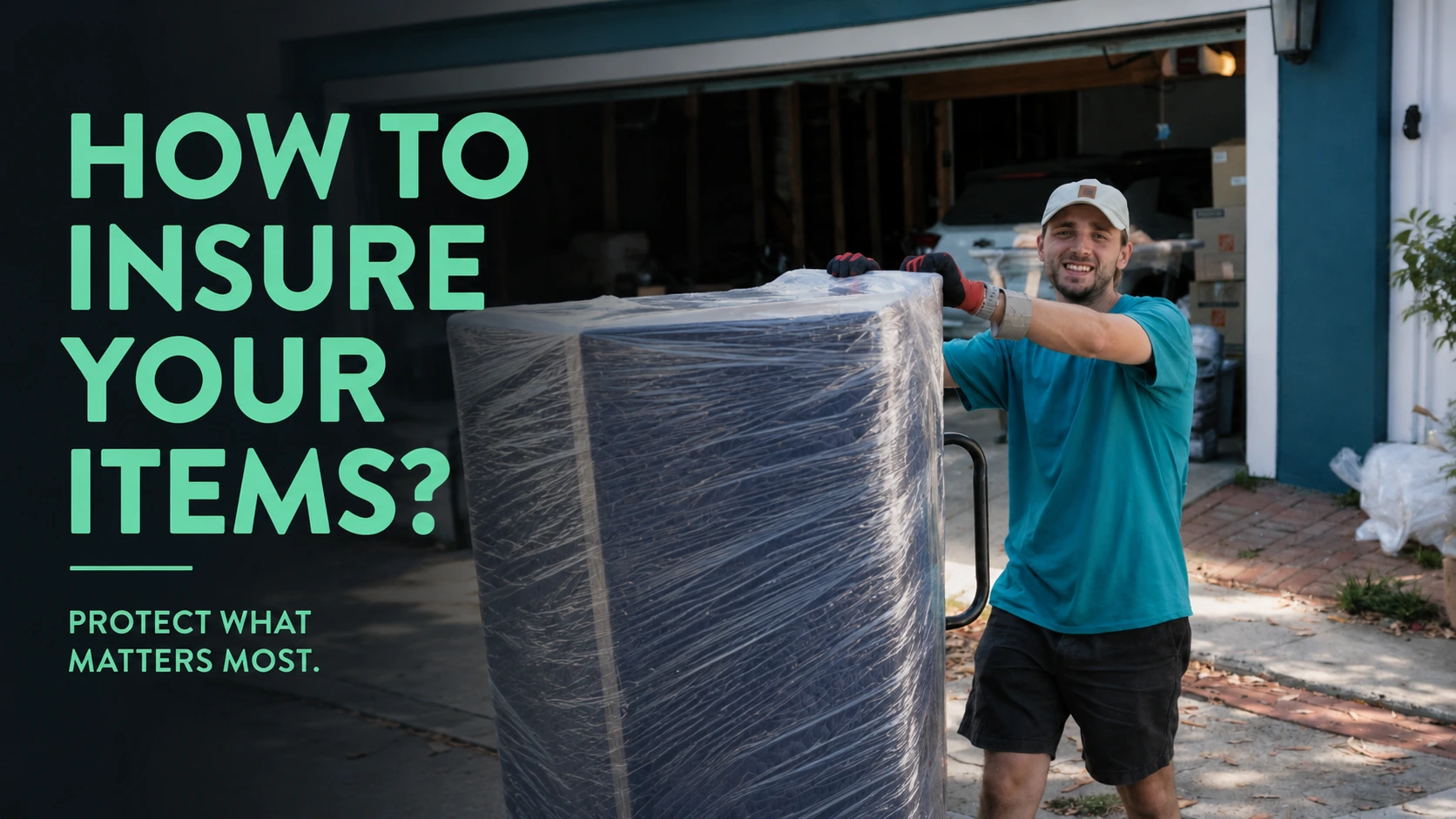
A lot of people think about money when they’re moving, but insurance rarely makes the list until something goes wrong. Moving insurance matters more than most people realize, and here’s the part that catches almost everyone off guard: hiring a professional crew doesn’t automatically mean your belongings are fully covered.
Under federal law, a carrier’s basic liability sits at just $0.60 per pound. Sounds fine until you do the math. A 30-pound TV worth $1,200 gets you exactly $18 in compensation if it’s damaged. Eighteen dollars. So before signing anything, it’s worth understanding what protection options actually exist, because choosing the right coverage matters just as much as choosing the right company.
Do I Need Moving Insurance?
“Do I need moving insurance?” comes up early in almost every conversation with a client. The honest answer depends on a few things: how much your stuff is worth, how far it’s traveling, and how comfortable you are absorbing a loss yourself if something breaks. For quality furniture and appliances, insurance tends to matter a lot. And it’s usually cheaper than replacing something outright. There’s no single answer to do I need moving insurance that fits everyone; it really comes down to weighing the value of what you own against the risk.
A few things worth factoring in:
- Property value. Items worth a few hundred dollars are a manageable risk for most people. Once you’re looking at $1,000-plus pieces, real coverage starts making sense.
- Type of move. Local moves are quicker and involve less handling. Long-distance and interstate moves keep your stuff on the road longer, with more loading and unloading along the way.
- Damage rates. Roughly one in ten moves ends up with a damage claim. Electronics, antiques, and appliances take the brunt of it.
- Risk tolerance. Some people are fine covering losses themselves. Others would rather pay a bit upfront and skip the anxiety, especially with valuable items in the mix.
- Valuable items. Musical instruments, designer furniture, that kind of thing usually needs more than the default coverage. It’s exactly why companies like Next Moving build out advanced protection options instead of treating insurance as an afterthought.
Released Value Protection vs Full Value Protection: The Two Types
Every licensed mover in the US has to offer two levels of liability protection before the move even starts. It’s not an upsell; it’s federal law. Most people who care about protecting what they own end up going with full value protection moving insurance, and honestly, once you see the numbers side by side, it’s not hard to understand why.
| Coverage | Cost | Payout method | Best for |
| Released Value | Free (default) | $0.60/lb | Low-value moves, small loads |
| Full Value Protection | 1-2% of shipment value | Repair/replace/cash | Households with valuable items |
Understanding how moving company insurance works up front saves a lot of headaches later. The difference between the two isn’t complicated: cost versus how much financial protection you actually have. Basic coverage is fine for cheap stuff. Full value protection is for anything you’d actually be upset to lose.
- Released Value Protection. This one’s automatic, included in most contracts for free. But the catch is real; it only covers $0.60 per pound of whatever got damaged, regardless of what the item actually cost.
- Full Value Protection. This is what most people mean when they talk about full-value protection moving insurance: it costs more, but for good reason. If something’s damaged or lost, the carrier repairs it, replaces it with a comparable item, or pays you cash. Most policies come with a deductible, often somewhere near $500.
Does Renters Insurance Cover Moving?
“Does renters insurance cover moving?” is one of those questions people assume has a simple yes-or-no answer. It doesn’t, really. Sometimes yes, but usually not as much coverage as people expect, and it’s often only valid for a narrow window, one to three months around the move. Insurers build in exclusions, and those exclusions are exactly where people end up with no compensation. Before moving day, it’s worth calling your insurance agent directly and asking does renters insurance covers moving for your specific policy. That’s the only way to know if in-transit coverage actually applies, and whether it follows you to the new address.
Here’s where renters coverage tends to apply, and where it doesn’t:
- Theft. If your policy includes personal property coverage, theft is usually included. Worth double-checking liability limits and exclusions first, though.
- Fire or natural disasters. Some policies cover damage while items sit in a warehouse or another city, but only for a set period spelled out in the contract.
- Damage by loaders. Damage the crew causes is typically covered under the moving company’s own contract terms, but in most cases, renters’ insurance won’t cover damage from careless packing.
- Scratches and scuffs. People ask does renters insurance covers moving items that get scuffed or dinged, and the answer is usually no. Minor wear and tear generally doesn’t count as an insured event.
- Items left in a car. Some policies extend to belongings in transit inside a vehicle, but it’s still a bad idea to leave anything valuable in the car overnight.
Third-Party Moving Insurance Companies
For many people, basic or even full-value coverage from the mover just isn’t enough, especially for designer furniture, professional equipment, or fine art. That’s where third-party moving insurance companies come in. Independent insurers typically offer higher liability limits than standard carriers, and choosing the best moving insurance option for valuable belongings can make a real difference if something goes wrong.
Independent coverage like this often supplements full-value protection, moving insurance rather than replacing it, and is useful when a single item is worth more than the rest of the shipment combined. A few names worth knowing:
- MovingInsurance.com. One of the more established specialized providers in the country, covering both local and interstate moves, and working across a range of different carriers.
- Baker International. Focused on household goods, including international relocations. Tends to offer higher limits and more flexible terms for expensive items.
- Relocation Insurance Group. Offers customized coverage for local, interstate, and international moves, with the flexibility to insure a wide range of personal property.
How Much Does Moving Insurance Cost?
Moving insurance costs depend mostly on the type of coverage and the value of what’s being moved, plus the distance and any additional charges a specific insurer charges. It’s worth actually sitting down and weighing the premium against what you’d be out if something broke.
| Coverage type | Cost basis | Typical price (mid-size move) |
| Released Value Protection | Free (included) | $0 |
| Full Value Protection (from mover) | 1-2% of shipment value | $50 – 300 |
| Third-party transit insurance | 1-3% of declared value | $80 – 400 |
| Specialty riders (art, electronics) | Item-specific | $20 – 100 per item |
Think of moving insurance costs less as an added expense and more as protection you’re paying for once, upfront, instead of eating a much bigger bill later. Most people find that Full Value Protection through the carrier is enough on its own. Some combine it with extra coverage for a handful of specific items.
At Next Moving, insurance isn’t something clients have to hunt down or pay extra for to get basic protection; we include it as standard across every move, from the first item disassembled to the last one set down at the new place.
Certificate of Insurance: What It Is and When You Need One

A Certificate of Insurance Moving (COI) is a separate document from your moving insurance policy, and people often mix the two up. A COI confirms the moving company carries valid liability insurance; it protects the building owner, management company, or HOA from financial exposure, not your belongings. A lot of apartment buildings and office complexes won’t let a mover through the door without one.
What’s usually required:
- Proof of the carrier’s liability insurance: nearly every building requires it.
- Confirmation of workers’ compensation coverage.
- The building or management company is listed as “Additional Insured” on the certificate; many complexes are strict about this.
- Current valid coverage dates are clearly listed.
- Reaching out to building management roughly 10 days ahead of time to get the full list of what they need.
- Submitting the certificate at least 48 hours before move day is standard for most complexes.
Honestly, needing a Certificate of Insurance for moving and having a company that can produce one instantly, without scrambling, says a lot about how professional that mover actually is.
How to Choose Moving Insurance
“How to choose moving insurance” tends to be the question people land on once they’ve realized coverage isn’t one-size-fits-all. The right choice comes down to what your items are worth, how far they’re traveling, and what the contract actually spells out. It deserves its own slice of time during move prep, not an afterthought squeezed in the night before.
Steps worth working through:
- Estimation. Add up the full replacement value of your furniture, appliances, and electronics, current market prices, not what you paid years ago.
- Priorities. Flag the expensive stuff specifically: laptops, TVs, instruments, jewelry, art.
- Verification. This is where how to choose moving insurance really gets tested. Call your renters or homeowners insurer and ask directly whether your policy covers anything during transit.
- Comparison. Ask the carrier for the full rundown on Full Value Protection, exclusions, the deductible, and how compensation is actually calculated.
- Alternative. If your total property value exceeds $25,000, it’s worth getting at least one outside quote, too. This is really where the question of how to choose moving insurance is most important.
- Decision. Weigh three things: what deductible you’re comfortable paying, potential losses, and how complicated the claims process might get.
- Documents. Read the full policy before signing, especially the limitations, which tend to hide in the fine print.
- Questions. Ask directly about moving company insurance and don’t stop until the coverage terms make sense.
Moving Insurance FAQ
Is Full Value Protection worth the cost?
For anyone moving expensive furniture or electronics, yes. It covers repair, replacement, or actual value, which basic coverage simply doesn’t.
What happens if movers damage my items under Released Value Protection?
Compensation caps at $0.60 per pound, regardless of what the item was actually worth.
Does my homeowners insurance cover items damaged by movers?
Rarely. Most standard homeowner policies exclude damage caused by a professional moving company.
Can I file a claim with both the moving company and my insurance?
Sometimes, depending on the situation. Typically, the claim goes to the carrier first, and the insurer decides afterward whether to cover whatever’s left based on the policy terms.
How long do I have to file a damage claim after moving?
It varies by contract and policy, but reporting damage immediately after delivery is always the safer move.
Common questions
Do I Need Moving Insurance?
“Do I need moving insurance?” comes up early in almost every conversation with a client. The honest answer depends on a few things: how much your stuff is worth, how far it’s traveling, and how comfortable you are absorbing a loss yourself if something breaks. For quality furniture and appliances, insurance tends to matter a lot. And it’s usually cheaper than replacing something outright.
Does Renters Insurance Cover Moving?
“Does renters insurance cover moving?” is one of those questions people assume has a simple yes-or-no answer. It doesn’t, really. Sometimes yes, but usually not as much coverage as people expect, and it’s often only valid for a narrow window, one to three months around the move. Insurers build in exclusions, and those exclusions are exactly where people end up with no compensation.
How Much Does Moving Insurance Cost?
Moving insurance costs depend mostly on the type of coverage and the value of what’s being moved, plus the distance and any additional charges a specific insurer charges. It’s worth actually sitting down and weighing the premium against what you’d be out if something broke.
How to Choose Moving Insurance?
“How to choose moving insurance” tends to be the question people land on once they’ve realized coverage isn’t one-size-fits-all. The right choice comes down to what your items are worth, how far they’re traveling, and what the contract actually spells out. It deserves its own slice of time during move prep, not an afterthought squeezed in the night before. Steps worth working through: Estimation.

