
Moving Heavy Furniture: The Hidden Dangers of Doing It Yourself
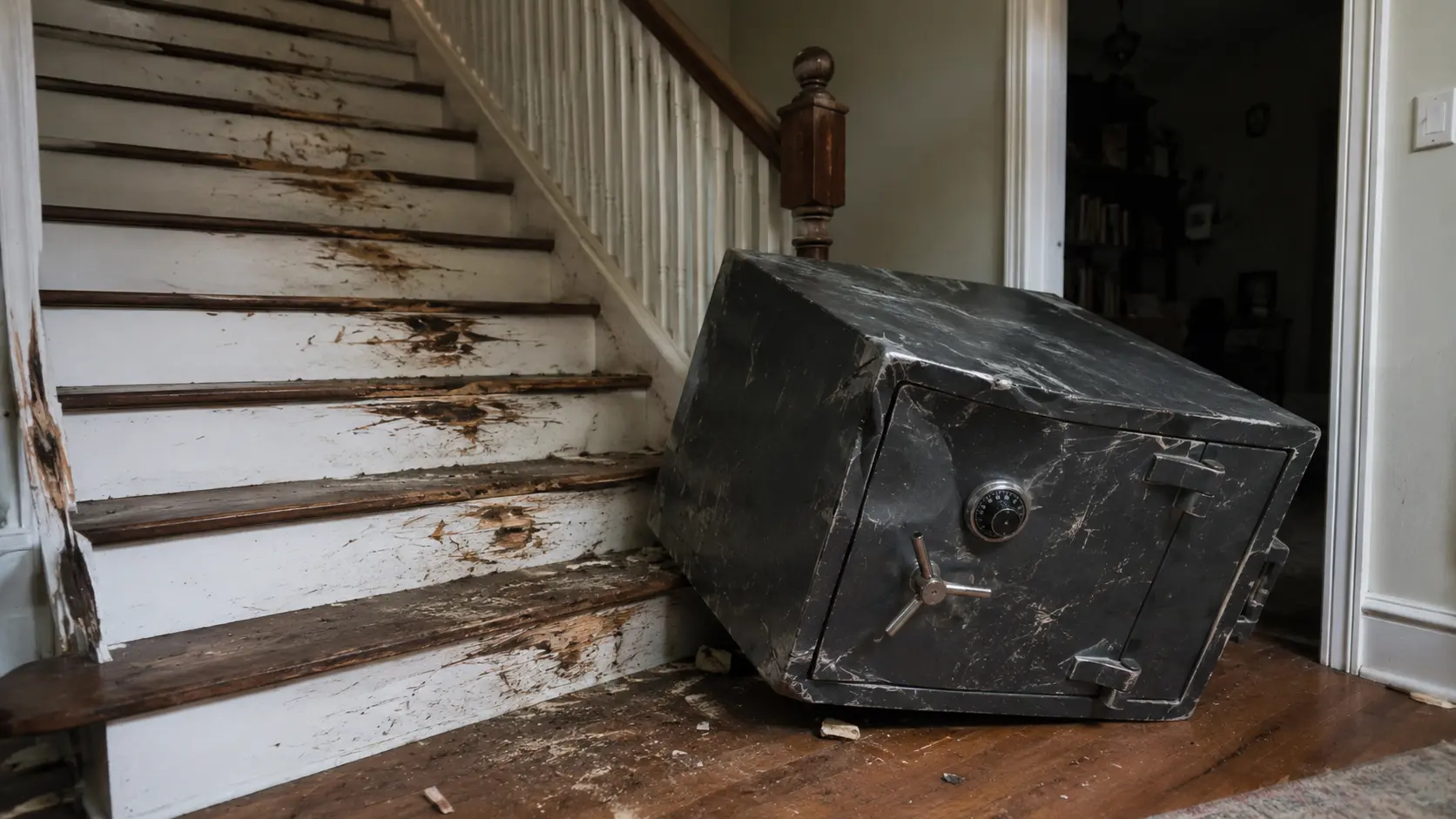
Heavy furniture looks manageable. It sits there, solid and visible, nothing fragile rattling inside. That illusion is exactly why moving heavy furniture sends more people to the emergency room (ER) than any other part of a move. Couches, dressers, wardrobes – these pieces punish overconfidence, and they punish it quickly.
This article breaks down how to move heavy furniture without wrecking a back, a floor, or a doorframe. It covers hidden risks, proper technique, stairs, carpet, how to wrap a couch for moving, and the point at which hiring help stops being optional.
Why Heavy Furniture Is More Dangerous Than It Looks
Numbers first. A sectional couch runs 200 to 350 pounds. A hardwood dresser sits between 150 and 300 pounds. An armoire or a wardrobe can be 500 pounds. Weight here isn’t centered like an appliance’s. It shifts. It tilts. It hides in corners nobody sees while carrying.
Moving heavy furniture causes more back, knee, and finger injuries than anything else on moving day. Over 50,000 ER visits a year in the US are attributed to moving furniture. Not bad luck, just physics meeting poor technique, over and over.
Property damage stacks up fast, and it stacks up in three predictable places:
- Scratched or gouged hardwood floors ($800 to $3,000+ to refinish)
- Drywall dents and holes ($150 to $400 per repair)
- Cracked or splintered door frames ($200 to $600)
A single dropped armoire wrecks three things at once: itself, the floor beneath it, and whoever was holding it.
Once injury risk and repair costs come into play, doing it all alone rarely saves money. Anyone who’s learned moving heavy furniture the hard way knows the lesson usually costs more than the help would have.
How to Move Heavy Furniture Safely
Technique beats muscle, and understanding how to move heavy furniture safely starts long before anyone lifts anything.
Empty the piece first. A loaded dresser can weigh 50 to 100 pounds more than its bare frame. Pull the drawers. Remove doors and shelves, too, since lighter parts grip more easily and wrap faster. Then measure. Most doorways are 32 inches wide; hallways are between 36 and 42 inches. Turns wreck furniture far more often than straight paths do.
Decide early whether a piece travels whole or comes apart. Sectionals, bed frames, and large tables often separate, and checking beforehand saves a stuck doorway later.
A short equipment list covers most jobs:
- A furniture dolly rated for the actual weight
- Moving straps with shoulder loops
- Furniture sliders
- Enough moving blankets to cover every exposed edge.
Bring two people at minimum, three once anything crosses 200 pounds. Straps matter here; they shift the load from the back to the legs, reducing injury risk compared to bare-hand lifting. Wrap before moving anything; place blankets under stretch wrap. Never tape directly on wood, since tape lifts the finish.
On tight or steep sections, the stronger person stays low, the other stabilizes above. Short words work mid-carry: step, tilt, stop. One voice calls it, not two. And one rule outweighs the rest: never grip drawers, trim, or armrests. None of it is structural. It snaps, and the piece drops.
How to Move Heavy Furniture by Yourself
Most heavy furniture cannot be moved safely by one person. Strength isn’t the limiting factor; balance and control are. A 200-pound load that starts tipping gives no one working solo a second chance.
How to move heavy furniture by yourself works only under narrow conditions: items under 100 pounds, single-level paths with no stairs, pieces with built-in handles, or sliders dragging rather than lifting across smooth floors.
It fails consistently with any couch longer than six feet, solid-wood dressers or armoires, anything crossing stairs or doorways, and pieces relying on decorative, non-structural trim.
Realistically, how to move heavy furniture by yourself means repositioning within a room, not relocating a household. A helper for an hour costs far less than an injury does.
How to Move Heavy Furniture Up and Down Stairs
Stairs turn a routine job into the riskiest part of the day. Over 60% of furniture-moving injuries happen there, and most of them are preventable.
Two people minimum. Straps or a shoulder dolly give real control on uneven steps. Clear the staircase entirely first: no rugs, no clutter, doors propped open at both ends.
Going up: lift the front edge, let the lower person carry more weight, take one step at a time, rest at landings.
Going down: tilt back slightly so nothing slides forward. The lower person backs down slowly while the other steers the angle from above. Getting this sequence right is most of what how to move heavy furniture up stairs actually comes down to: pace, footing, and constant communication.
Anyone tempted to try moving heavy furniture downstairs alone should reconsider. How to move heavy furniture down stairs alone safely starts with admitting it’s rarely possible. The person below carries most of the weight while walking backward, blind to what’s underfoot. Serious injuries happen this way every year. A stair-climbing dolly with brakes helps if solo work truly can’t be avoided, though it remains risky regardless.
Past 150 pounds, wider than the stairwell, or facing a spiral staircase — that’s professional territory. Not a challenge worth proving.
How to move heavy furniture up stairs with a shoulder dolly specifically: the straps loop under the piece and across both carriers’ shoulders, keeping hands free for balance. It’s the single best piece of rental equipment for stair carries, and most people don’t know it exists until after the injury.
How to Move Heavy Furniture on Carpet
Carpet fights back differently than hardwood. Friction locks furniture in place, and dragging it wrong tears fibers underneath before anyone notices.
Sliders solve this. Hard plastic side down for carpet, felt side down for hardwood: different products, not interchangeable. Work one corner at a time, lifting slightly with a pry bar or a second person, sliding the disc underneath. Once all four legs sit on sliders, push. Never pull.
Skip the sliders, and the damage is predictable: torn fibers, permanently compressed padding, a gouged subfloor beneath it all. Pushing engages the legs and core; pulling directly loads the lower back. That’s precisely why how to move heavy furniture on carpet properly matters as much as knowing how to lift in the first place.
Thick carpet or anything over 300 pounds needs more than sliders alone. A dolly with a cross-board spreads the load further and keeps the piece stable across longer distances.
How to move heavy furniture on carpet for really heavy items, like a fully loaded bookshelf or a solid wood dresser, sometimes calls for a plywood sheet under the sliders. It provides a harder surface to push against and protects the carpet from compression along its entire path.
Moving a Couch: Wrapping and Carrying It Right
Couches take more damage than almost anything else on moving day. Fabric tears. Frames flex. Cushions vanish somewhere between rooms.
Start with prep. Pull every cushion and pillow, bag them separately, vacuum the upholstery thoroughly. Anything left embedded turns into a stain once sealed under wrap for hours.
How to wrap a couch for moving without ruining it:
- Wrap each arm separately in a moving blanket secured with stretch wrap
- Wrap the back as one continuous piece
- Wrap the seat base on its own allowing flex for tight turns
- Then finish with a full stretch-wrap layer sealing everything against dirt and moisture
Skipping any one step in how to wrap a couch for moving usually shows up later as a torn seam or a permanent stain. Never tape directly on upholstery; it pulls fibers and leaves residue behind.
Moving a couch properly means two people gripping the frame rather than the arms, lifting on a clear count. Use an angled tilt to clear narrow doors instead of forcing it straight through. Dragging, even a short distance, scratches floors and drags dirt into the fabric.
Check for connector clips before moving a couch as a single unit. Many sectionals split into two or three sections. Hauling a nine-foot sectional whole, when it could’ve broken into three smaller pieces, remains one of the most avoidable mistakes people make on moving day.
When to Call Professional Movers
Some situations leave little room for debate:
- Any single item over 250 pounds
- Stairs, especially steep, narrow, or spiral ones
- Antique or irreplaceable pieces
- Tight doorways or awkward turns
- No available help or equipment
Add up the rental cost for straps, sliders, and a dolly. Add a floor refinish, a wall patch, and an ER copay. The total often exceeds what a professional crew would have charged from the start.
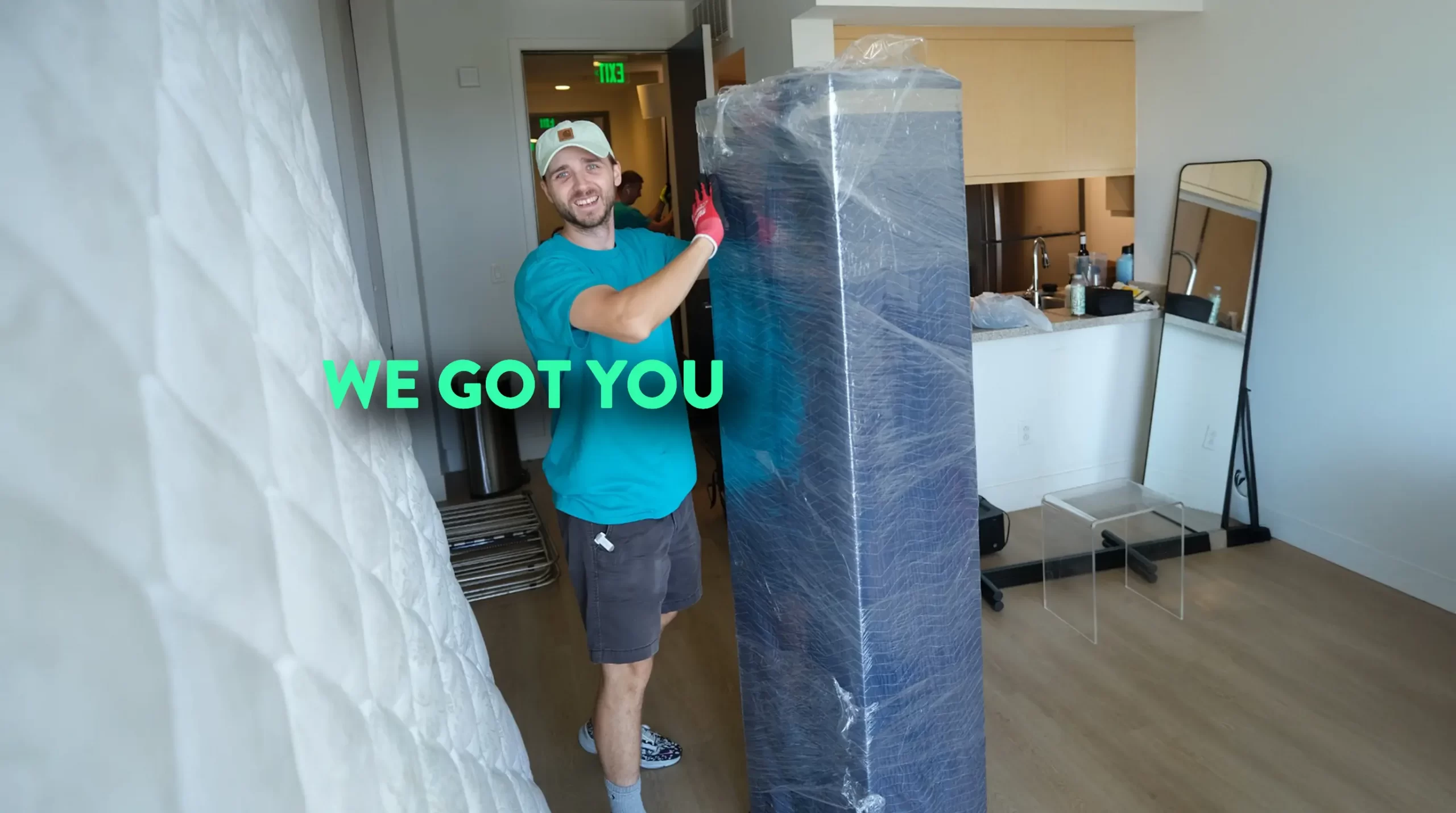
Next Moving handles moving heavy furniture as routine work across the Greater LA area, arriving with the crew, equipment, and insurance that take injury and damage off the table. Instead of risking your health, your home, and your sanity, let the experts handle the heavy lifting from start to finish. Our highly trained team arrives fully equipped with specialized tools, heavy-duty straps, and protective wraps to navigate tight corners, steep staircases, and delicate flooring without a single scratch.
Don’t let a DIY mistake turn into a costly emergency room visit or an expensive home repair bill. Protect your peace of mind and secure your moving day today. To get a free, no-obligation quote or book your professional crew right now, call (800) 433-1541 and let us do the hard work for you.
Heavy Furniture Moving FAQ
How many people do I need to move heavy furniture? Two for most items under 200 pounds. Three or more once weight or stairs come into play.
Can I move heavy furniture on hardwood floors without scratching them? Yes. Felt-bottomed sliders under each leg, pushed rather than dragged.
How do I move a couch through a narrow doorway? Tilt it onto its long edge and angle it through, rather than forcing it straight in.
What is the safest way to carry heavy furniture up stairs? Two or three people, straps for control, the stronger person positioned lower, one clear voice calling direction.
Do movers wrap furniture before moving it? Yes. Blankets are secured with stretch wrap to protect both the furniture and the walls, floors, and doorways along the way.
Common questions
Why Heavy Furniture Is More Dangerous Than It Looks?
Numbers first. A sectional couch runs 200 to 350 pounds. A hardwood dresser sits between 150 and 300 pounds. An armoire or a wardrobe can be 500 pounds. Weight here isn’t centered like an appliance’s. It shifts. It tilts. It hides in corners nobody sees while carrying. Moving heavy furniture causes more back, knee, and finger injuries than anything else on moving day. Over 50,000 ER visits a year in the US are attributed to moving furniture.
How to Move Heavy Furniture Safely?
Technique beats muscle, and understanding how to move heavy furniture safely starts long before anyone lifts anything. Empty the piece first. A loaded dresser can weigh 50 to 100 pounds more than its bare frame. Pull the drawers. Remove doors and shelves, too, since lighter parts grip more easily and wrap faster. Then measure. Most doorways are 32 inches wide; hallways are between 36 and 42 inches. Turns wreck furniture far more often than straight paths do.
How to Move Heavy Furniture by Yourself?
Most heavy furniture cannot be moved safely by one person. Strength isn’t the limiting factor; balance and control are. A 200-pound load that starts tipping gives no one working solo a second chance. How to move heavy furniture by yourself works only under narrow conditions: items under 100 pounds, single-level paths with no stairs, pieces with built-in handles, or sliders dragging rather than lifting across smooth floors.
How to Move Heavy Furniture Up and Down Stairs?
Stairs turn a routine job into the riskiest part of the day. Over 60% of furniture-moving injuries happen there, and most of them are preventable. Two people minimum. Straps or a shoulder dolly give real control on uneven steps. Clear the staircase entirely first: no rugs, no clutter, doors propped open at both ends. Going up: lift the front edge, let the lower person carry more weight, take one step at a time, rest at landings. Going down: tilt back slightly so nothing slides forward.

