
Moving Appliances: Why Refrigerators, Washers & Dryers Need Professionals

Moving large household appliances is not the same as moving furniture or boxes. Refrigerators, washing machines, and dryers take up significant space and pose real risks when handled without proper preparation: property damage, equipment failure, and personal injury are all common outcomes of incorrectly performed appliance moves.
Most people underestimate the complexity involved. A few helpers and a cargo dolly sound like enough until you’re navigating a 350-pound refrigerator through a narrow hallway or moving a washing machine down a flight of stairs. The internal mechanisms of these appliances are sensitive to improper handling, and damage isn’t always visible until the equipment is plugged in at the new address.
Why Major Appliances Need a Different Approach
Large appliances are different from most household items. The difference lies in weight, size, and the internal mechanisms that even minor mistakes during transportation can damage.
A typical refrigerator weighs 250 to 400 pounds; a washing machine runs 150 to 200 pounds; and a dryer adds another 100 to 150 pounds. That weight places significant stress on floors, stairwells, and door frames, not just on the people doing the carrying.
Inside these appliances are compressors, sealed refrigerant lines, drum suspension systems, and water connections. Three risks apply specifically to large appliances:
- Warranty. Many manufacturers refuse warranty service when they determine that damage resulted from improper transportation (unless it’s a delivery from the manufacturer itself). Moving appliances incorrectly doesn’t just put the equipment at risk. It can void the coverage protecting it.
- Flooring. The weight of large appliances can dent hardwood floors, tear linoleum, and damage tile. Metal support feet and wheel contact points on refrigerators are particularly hard on finished flooring.
- Injury. Moving heavy appliances is one of the most common sources of serious moving injuries. Back, shoulder, and knee injuries are the most common, and recovery can take weeks.
How to Move a Refrigerator
How to move a refrigerator safely starts at least 24 hours before moving day. The unit needs to be fully defrosted, emptied, and cleaned. Residual water from the defrost cycle must dry completely, especially around the floor and the back of the unit.
How to transport a refrigerator correctly also means measuring doorways in advance. A refrigerator that doesn’t fit through an exit doorway is a problem that wastes time and risks damage to both the walls and the unit. Measure the appliance and every doorway it will pass through before moving day arrives.
Additional preparation steps for the refrigerator move:
- Doors must be secured with straps or tape before the unit is moved. An unsecured door can swing open unexpectedly and be damaged.
- A proper appliance dolly with securing straps and protective blankets is required. Standard furniture dollies don’t provide the stability needed for appliances of this weight.
- The refrigerator should travel upright whenever possible. If it must be tilted to navigate a tight turn, the tilt should be brief.
How to Move a Refrigerator by Yourself
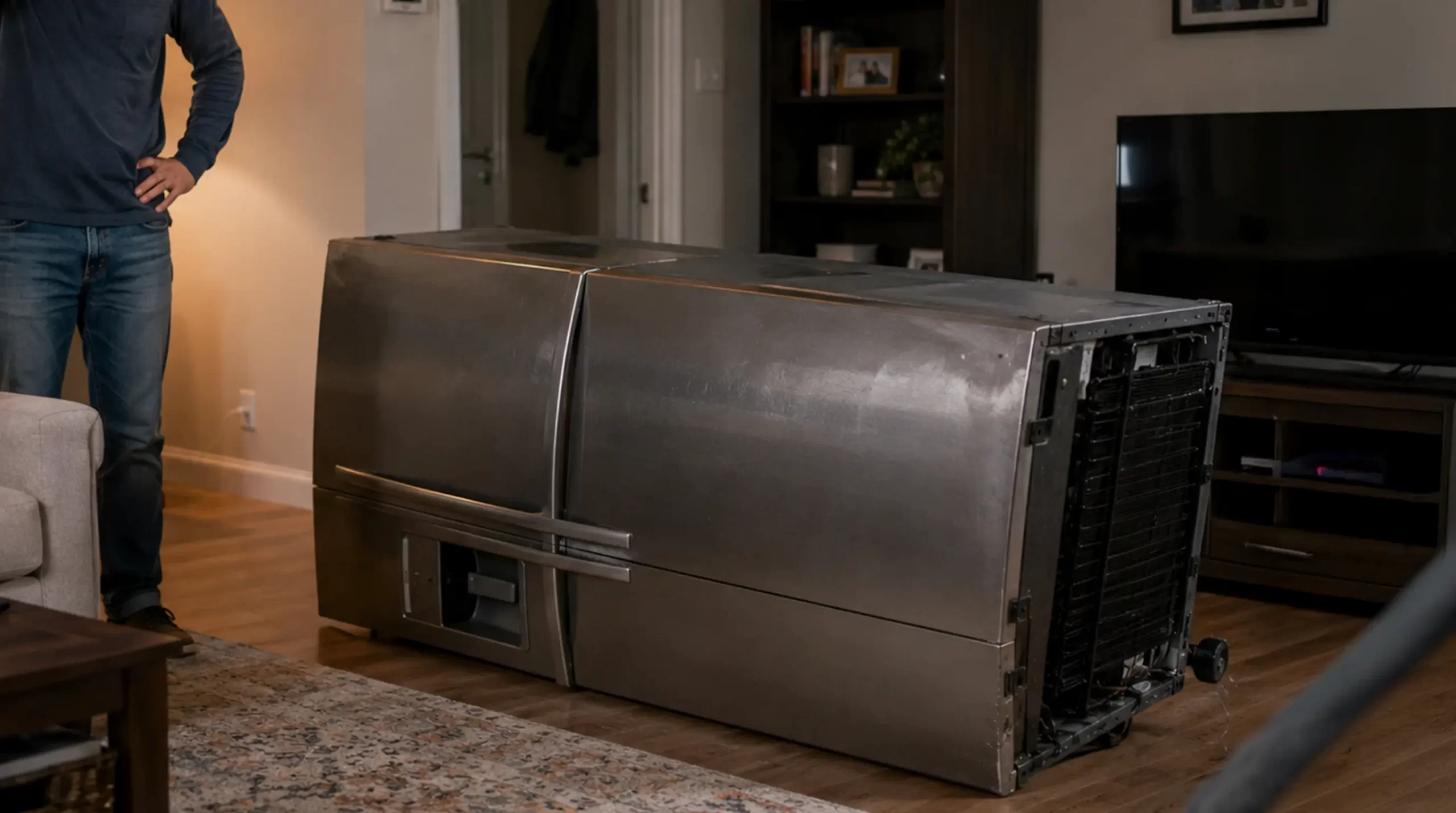
How to move a refrigerator by yourself is technically possible but comes with clear constraints. Two people are the minimum; in most cases, you need even more. Moving a full-size refrigerator alone significantly increases the risk of injury, equipment tipping, and floor damage.
How to move a refrigerator by yourself with one helper also requires renting the right equipment. An appliance dolly costs $25 to $40 per day. Moving straps designed for refrigerators run $15 to $30. Without both, the job becomes harder, and the risk profile changes considerably.
Three situations where self-moving becomes genuinely difficult:
- Stairs. Even with two people and proper equipment, stairwells add meaningful complexity. Professional crews train specifically for stairwell appliance moves and handle them regularly.
- Narrow hallways and tight corners. Refrigerators can’t always turn the same direction as furniture. Knowing how to angle and pivot through tight spaces is a skill that develops through repetition across many moves.
- Premium or built-in models. High-end refrigerators can cost several thousand dollars or more. The cost of potential damage should be weighed against the cost of professional help before committing to a DIY move.
Can You Transport a Refrigerator on Its Side?
Can you transport a refrigerator on its side? Technically, yes, but it’s the worst available option and creates a real risk of permanent compressor damage.
Most manufacturers specifically recommend upright transport. The reason relates to compressor design. The compressor contains lubricating oil that sits at the bottom of the system when the refrigerator is vertical. When the unit is laid on its side, the oil can migrate into the refrigerant lines. If the refrigerator is started before the oil has returned to the correct position, the compressor runs without adequate lubrication and can fail.
Understanding how to transport a refrigerator horizontally, when it’s unavoidable, means following specific precautions:
- Position the refrigerator on the side opposite the compressor, which is usually the right side when facing the front. This minimizes oil migration.
- Limit horizontal transport time to one to two hours where possible.
- After delivery, stand the refrigerator upright and wait the appropriate time before plugging it in. The longer it was horizontal, the longer the wait.
Can you transport a refrigerator on its side without any lasting damage? Some units survive it without problems. Others don’t. The answer depends on the model, how long it was horizontal, and how carefully it was handled.
Can you transport a refrigerator on its side and use it the same day? No. The risk of oil migration poses a real threat to the compressor, regardless of how brief the horizontal period was.
How to Move a Washer and Dryer
Moving a washer and dryer looks more manageable than moving a refrigerator, but it still requires preparation and has its own failure points.
Washing machines need to be properly disconnected before transport. Run an empty wash cycle first to remove residual water from the drum. Then shut off the hot and cold water supply lines, disconnect the hoses, and drain remaining water into a container. Even after the cycle, water remains in the hoses and pump. Skipping drainage means water on the truck floor.
Shipping bolts are critical for front-loading washing machines. These bolts secure the drum during transport and prevent the suspension system from being damaged by movement. Without them, the drum can shift and damage the bearings or the cabinet. Manufacturers sell replacement kits for older models; they’re worth sourcing before moving day.
How to move a washer and dryer by yourself follows the same general rule as refrigerators: two people minimum, proper appliance dolly, clear pathways. Combined washer-dryer units can exceed 300 pounds and genuinely belong in the professional category for most households.
Moving a washer and dryer over longer distances requires additional care. Vibration over a long route affects the drum suspension differently than it does over a short local move. Shipping bolts should be installed regardless of the distance of the move.
How Long to Wait Before Using Appliances After the Move
How long to wait to plug in the fridge after moving depends on how the refrigerator was transported:
- Upright throughout the move: wait at least three to four hours.
- Tilted during loading or unloading: wait at least 24 hours.
- Transported horizontally: wait 24 to 48 hours.
How long to let the fridge sit after moving depends on the compressor oil. The oil needs time to drain back to the correct position in the compressor before the unit runs.
How long to wait to plug in the fridge after moving is worth taking seriously because compressor replacement is expensive, often more than the appliance itself in older models.
For washing machines and dryers, the post-move checklist is different:
- Level the washing machine precisely. An unlevel machine vibrates excessively during spin cycles, wears out the drum bearings faster, and can walk across the floor while operating.
- Check the dryer vent connection before the first cycle. A loose or disconnected vent poses a fire risk due to lint accumulation and heat buildup.
- Reconnect water supply lines and check for leaks before running the first wash cycle.
How long to wait to plug in the fridge after moving gets the most attention, but the full post-move appliance checklist covers washing machines and dryers, too.
When to Call a Refrigerator Moving Service
Refrigerator moving service near me searches typically happen after someone has looked at the situation and decided the DIY route isn’t the right call. The common triggers:
- Stairs at either location make moving the refrigerator and washing machine significantly more difficult and substantially increase the risk of injury.
- Long-distance moves where vibration exposure is extended and access to the equipment during transit is limited.
- Premium or built-in appliance models, where damage costs would be high.
- Lack of access to appropriate equipment or a tight timeline increases the risk of a mistake.
Refrigerator moving service near me from Next Moving includes crews trained in appliance handling, proper dollies for appliances with securing straps, and protective blankets. The crew coordinates access path preparation before the appliance is moved and handles the pre-move checklist items that prevent damage: shipping bolt installation, water line disconnection, and door securing.
Moving Appliances FAQ
How long should I wait to plug in a refrigerator after moving?
How long to wait to plug in the fridge after moving depends on the transport position. Upright throughout: three to four hours. Tilted at any point: 24 hours. Horizontal transport: 24 to 48 hours. The wait allows compressor oil to return to the correct position before the unit starts running.
Can you transport a refrigerator on its side?
Yes, but it’s the riskiest transport option. Compressor oil can migrate into the refrigerant lines when the compressor is horizontal. After horizontal transport, the refrigerator must stand upright for the full wait period before being plugged in.
Do movers move appliances?
Yes. Professional companies move refrigerators, washing machines, and dryers using appliance dollies, securing straps, and protective blankets. They also handle preparation steps, including shipping bolt installation, door securing, and hose disconnection.
How much does it cost to move a refrigerator?
Cost depends on the unit’s weight, access conditions, distance, and whether additional services, such as stair navigation or disconnection, are included. Get a written estimate that itemizes these factors before booking.
Will my appliance warranty cover damage from moving?
Many manufacturers exclude transportation damage from warranty coverage, particularly when professional service wasn’t used. Check the warranty terms before moving day, not after a problem has already occurred.
Common questions
Can You Transport a Refrigerator on Its Side?
Can you transport a refrigerator on its side? Technically, yes, but it’s the worst available option and creates a real risk of permanent compressor damage. Most manufacturers specifically recommend upright transport. The reason relates to compressor design. The compressor contains lubricating oil that sits at the bottom of the system when the refrigerator is vertical. When the unit is laid on its side, the oil can migrate into the refrigerant lines.
Why Major Appliances Need a Different Approach?
Large appliances are different from most household items. The difference lies in weight, size, and the internal mechanisms that even minor mistakes during transportation can damage. A typical refrigerator weighs 250 to 400 pounds; a washing machine runs 150 to 200 pounds; and a dryer adds another 100 to 150 pounds. That weight places significant stress on floors, stairwells, and door frames, not just on the people doing the carrying.
How to Move a Refrigerator?
How to move a refrigerator safely starts at least 24 hours before moving day. The unit needs to be fully defrosted, emptied, and cleaned. Residual water from the defrost cycle must dry completely, especially around the floor and the back of the unit. How to transport a refrigerator correctly also means measuring doorways in advance. A refrigerator that doesn’t fit through an exit doorway is a problem that wastes time and risks damage to both the walls and the unit.
How to Move a Refrigerator by Yourself?
How to move a refrigerator by yourself is technically possible but comes with clear constraints. Two people are the minimum; in most cases, you need even more. Moving a full-size refrigerator alone significantly increases the risk of injury, equipment tipping, and floor damage. How to move a refrigerator by yourself with one helper also requires renting the right equipment. An appliance dolly costs $25 to $40 per day. Moving straps designed for refrigerators run $15 to $30.

