
Moving a Piano: Cost, Risks & Why You Shouldn’t DIY
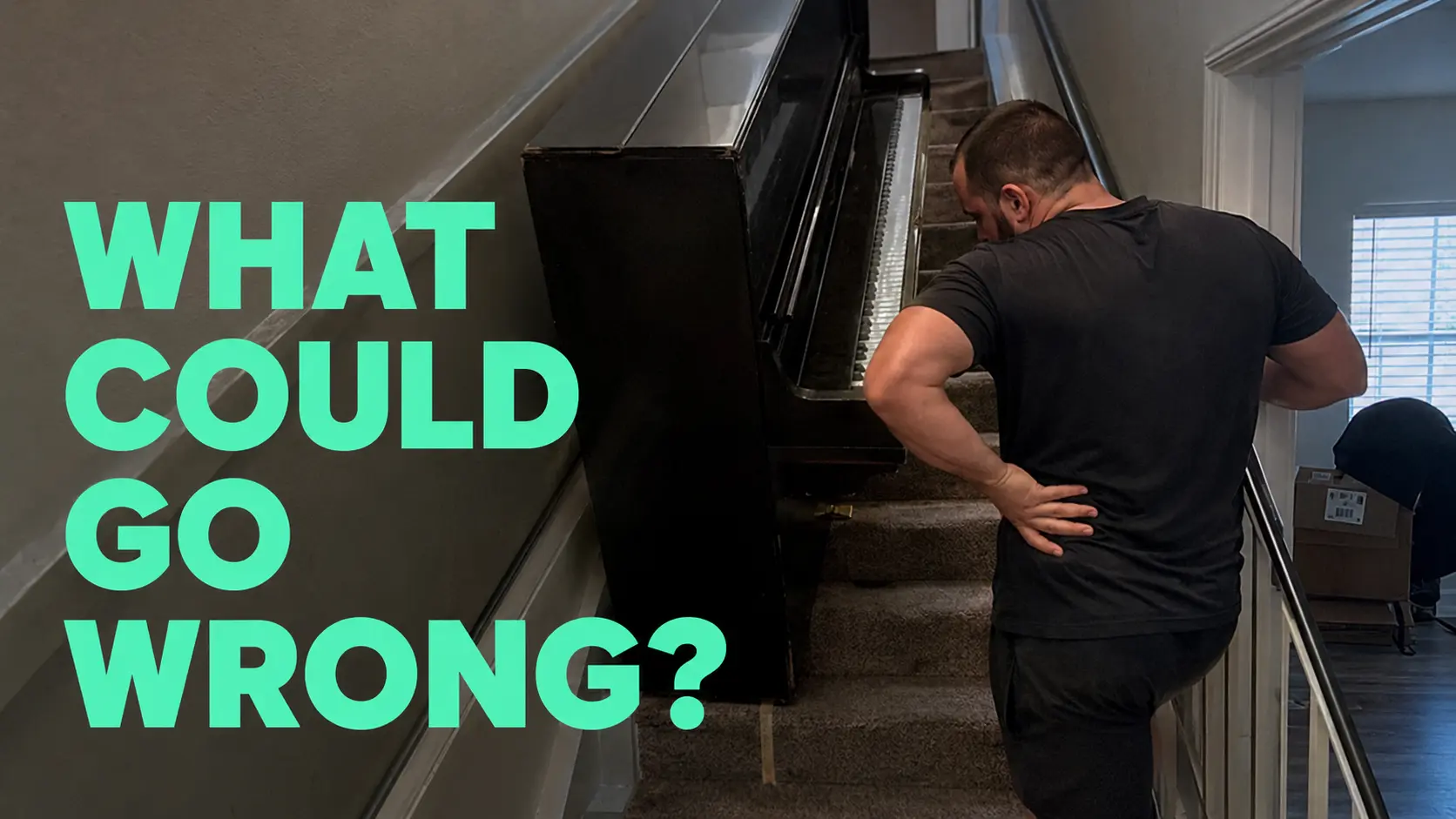
A piano looks like furniture, and it behaves like an instrument under tension. Inside that wooden case sits 300 to 1,200 pounds of wood, cast iron, and over 200 strings pulling against the frame at a combined force of 18 to 20 tons. Get the angle wrong, use the wrong dolly, or bring the wrong helpers, and you’re looking at a cracked soundboard, a snapped leg, or a serious injury.
To prevent all of this from happening, you need to plan everything. That’s why we’ll explain the actual cost of moving a piano, the risks involved if you decide to move it yourself, and why professional piano movers are in a league of their own. The question of how to move a piano properly starts with understanding the scale of the task.
Why Moving a Piano Is Different
With most pieces of furniture, the weight is distributed fairly evenly. But with a piano, it’s a little different. The average weight of a piano is about 300-500 pounds; for a small grand piano, it ranges from 500 to 650 pounds, and for a concert grand, it ranges from 800 to 1,200 pounds. Most of this weight is concentrated in the cast-iron plate and the tensioned strings, rather than in the wooden case, which, one might think, serves as the load-bearing structure.
The internal components cannot withstand impacts the same way a dresser can. An impact can crack the plate, and such damage is often impossible to repair fully. The mechanism, consisting of more than 7,000 (!) moving parts that connect the keys to the hammers, breaks down due to careless handling. The strings go out of tune permanently when the frame is subjected to an unexpected jolt. Climatic conditions exacerbate all of this: a 30-minute ride in the hot bed of a truck without climate control can warp the plate, so that the consequences become apparent a few weeks later as buzzing strings or a muffled sound.
And now a bit about the real cost of transporting a piano yourself:
- Tuning a piano after a move costs approximately $150-$300.
- Adjusting the action after rough handling costs approximately $400-$800.
- Plate repairs start at $1,500 and can go up to $5,000.
- If it’s an antique grand piano, the cost can reach five figures.
How to Move a Piano
How to move a piano correctly follows a specific sequence. This section covers the upright process, which applies to most homeowners searching for this question.
Start with the crew: a minimum of four strong adults. Equipment matters as much as manpower: a piano dolly rated for the actual weight, moving blankets, ratchet straps, and a piano board if stairs are involved.
Before anything moves, close and lock the keyboard lid. Wrap the entire piano in moving blankets secured with straps, never tape, since tape pulls finish off when removed and that damage isn’t reversible without refinishing.
Tipping the piano onto the dolly is where things most often go wrong. Two people support the weight while two stabilize from the sides, keeping the tip controlled and slow. Navigating doorways and corners requires one person to call directions clearly, since uncoordinated movement is how corners get clipped and fingers get pinched. Once loaded, the piano is secured with straps to the truck wall, never to the piano itself: strapping the body puts stress on a structure not designed to bear restraining forces and can crack the case under hard braking.
Skip the blanket wrap, and you get a scratched finish. Skip the strap-to-wall step, and the piano shifts in transit, which is how legs snap mid-drive. This is the upright process specifically. Grands and baby grands require an entirely different approach, covered below.
How to Move a Piano Yourself
How to move a piano yourself is technically possible in one narrow scenario, and it’s worth being honest about how narrow it is.
DIY genuinely works only for: a small upright under 400 pounds, on a single ground floor with no stairs, four strong adult helpers with moving experience, and properly rented equipment (piano dolly, straps, blankets).
Even in that best case, the math doesn’t favor DIY. Rental equipment runs $80 to $150. A professional move costs $200 to $400 for a comparable upright. One slip means $500 to $3,000 in piano repairs, plus the risk of a back injury that would cost far more than the move would have professionally.
How to move a piano yourself is never the right call for any grand or baby grand, since disassembly requires equipment most rental shops don’t carry. Any move with stairs. Any antique or sentimental piano. Any long-distance move, where climate exposure and prolonged vibration matter in ways a local move doesn’t.
How to Move a Grand or Baby Grand Piano
How to move a grand piano doesn’t follow the upright process at all. Grands and baby grands aren’t moved standing up. They’re disassembled and transported lying on their side on a piano board, sometimes called a skid.
The sequence:
- Close and lock the lid and keyboard cover.
- Remove the music desk.
- Detach the pedal lyre, held by two screws and a stabilizer rod.
- Tip the piano onto its straight side, never the curved bass side, onto the piano board.
- Secure with straps.
- Remove the legs one at a time while the body stays supported on the board.
- Wrap the board and piano together in blankets.
- Load on its side using a dolly under the board.
The legs on a grand are bolted attachments, not part of the load-bearing structure for the body. Moving a grand upright on its legs risks snapping a leg, dropping the piano, and destroying the soundboard in a single failure. The piano board distributes weight across the body’s straight side, its strongest structural surface. This is why how to move a grand piano is treated as a separate skill from general furniture moving.
How to move a baby grand piano follows the identical process as a full concert grand. Baby grands run 5 to 6 feet; full grands run 6 to 9 feet. The difference is crew size and truck space. Anyone researching how to move a baby grand piano specifically should expect the same disassembly sequence, scaled to a smaller frame.
This work requires 4 to 5 trained piano movers, specialty equipment most rental shops don’t stock, and familiarity with brand quirks: Steinway, Yamaha, and Bösendorfer each have construction details experienced movers know to handle differently. This is not a job for general movers, let alone homeowners working from a list of steps.
How Much Does It Cost to Move a Piano?
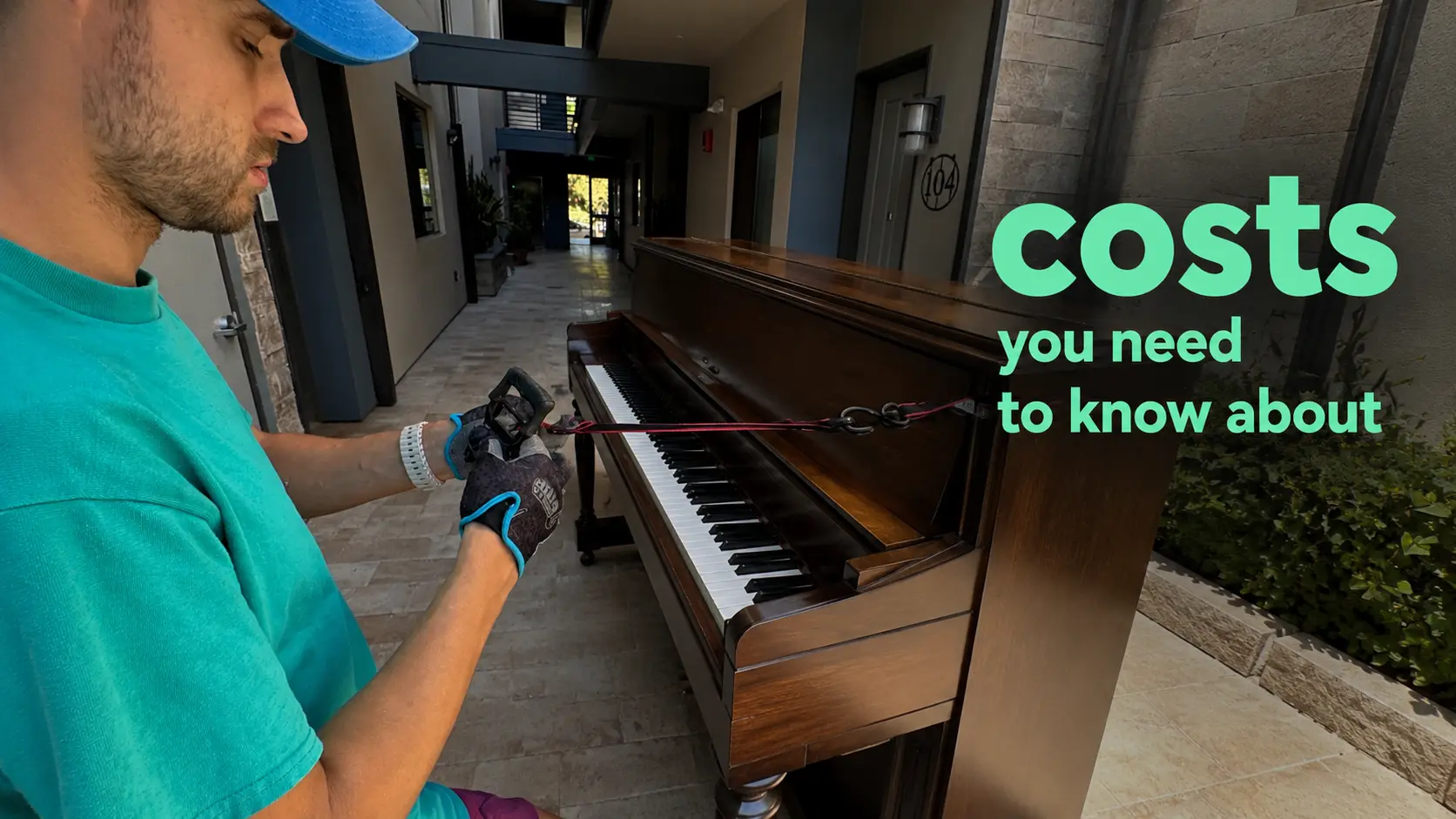
How much does it cost to move a piano depends heavily on the type and distance:
- Upright piano, local move: $150 to $400
- Baby grand, local move: $400 to $800
- Grand piano, local move: $600 to $1,500
- Long-distance (over 100 miles), any type: $700 to $3,000+
Factors that move the price within these ranges: stairs ($40 to $100 per flight), narrow hallways or tight turns, distance, climate-controlled truck requirements (essential for antiques and quality instruments), insurance level, and elevator access at the destination.
Quotes under $100 are a red flag, not a deal. Either the company is sending general movers without piano equipment, or they’re not carrying the right insurance. Either way, the risk sits with you.
How much it costs to move a piano with a reputable company depends on the quote, which typically follows an in-person or video assessment. Piano moving is one of the few moving services where price genuinely reflects skill level. The cheapest quote is almost always the most expensive option once something goes wrong.
How Much Does It Cost to Move a Baby Grand Piano?
How much does it cost to move a baby grand piano? Specifically: $400 to $800 local, $1,500 to $3,000 or more long-distance.
Baby grands cost more than uprights despite sometimes weighing less, and the reason comes down to process rather than weight. Disassembly requires skilled hands: removing legs, detaching the pedal lyre, and boarding the instrument on its side. Crew size runs 4-5, versus 3 for a typical upright. The truck also needs dedicated floor space for the boarded piano lying flat, rather than the compact footprint an upright requires.
Insurance is the other piece of the cost. The replacement value of a baby grand ranges from roughly $5,000 for budget brands to $80,000 or more for a vintage Steinway. Any reputable mover carries insurance matched to that value, built directly into the quote. A cheap quote on a baby grand move is an even bigger warning sign than on an upright.
When to Call a Piano Moving Service
DIY genuinely doesn’t make sense for any grand or baby grand piano, always. Any antique or vintage instrument where damage isn’t fully repairable, and replacement cost can run into five or six figures. Any move with stairs. Any long-distance move, where climate exposure and sustained vibration matter over hours of driving. Any piano with sentimental value. And the practical reality of not having four trained helpers and specialty equipment on hand.
A single damaged soundboard or a snapped leg costs more to repair than the entire professional move would have. That’s before counting the risk of personal injury from dropping 500 to 1,000 pounds of cast iron and wood on a foot, a hand, or a back.
Next Moving partners with specialty piano movers for Greater LA piano relocations and can coordinate the piano portion of your move alongside the rest of your household items, so you’re not managing two separate companies on the same day.
Piano Moving FAQ
How much does it cost to move a piano locally?
Depends on type: $150 to $400 for an upright, $400 to $800 for a baby grand, $600 to $1,500 for a full grand. Stairs and access difficulty push toward the higher end.
Can two people move an upright piano?
Not safely. Four people is the practical minimum, even for a small upright. Two people significantly increase the risk of dropping it or sustaining an injury.
Do I need to tune my piano after moving?
Yes, almost always. Even a careful, professional move exposes the instrument to vibration and minor climate shifts. Budget $150 to $300 for a post-move tuning.
How much does it cost to move a grand piano long-distance?
Typically $700 to $3,000 or more, depending on distance, value, and whether climate-controlled transport is required. Get a written quote based on an actual assessment.
Is moving a piano covered by regular moving insurance?
Often not fully. Standard coverage frequently caps well below a piano’s actual replacement value, particularly for grands and antiques. Ask specifically about piano coverage before booking.
Common questions
How Much Does It Cost to Move a Piano?
How much does it cost to move a piano depends heavily on the type and distance: Upright piano, local move: $150 to $400 Baby grand, local move: $400 to $800 Grand piano, local move: $600 to $1,500 Long-distance (over 100 miles), any type: $700 to $3,000+ Factors that move the price within these ranges: stairs ($40 to $100 per flight), narrow hallways or tight turns, distance, climate-controlled truck requirements (essential for antiques and quality instruments), insurance level, and elevator…
How Much Does It Cost to Move a Baby Grand Piano?
How much does it cost to move a baby grand piano? Specifically: $400 to $800 local, $1,500 to $3,000 or more long-distance. Baby grands cost more than uprights despite sometimes weighing less, and the reason comes down to process rather than weight. Disassembly requires skilled hands: removing legs, detaching the pedal lyre, and boarding the instrument on its side. Crew size runs 4-5, versus 3 for a typical upright.
Why Moving a Piano Is Different?
With most pieces of furniture, the weight is distributed fairly evenly. But with a piano, it’s a little different. The average weight of a piano is about 300-500 pounds; for a small grand piano, it ranges from 500 to 650 pounds, and for a concert grand, it ranges from 800 to 1,200 pounds. Most of this weight is concentrated in the cast-iron plate and the tensioned strings, rather than in the wooden case, which, one might think, serves as the load-bearing structure.
How to Move a Piano?
How to move a piano correctly follows a specific sequence. This section covers the upright process, which applies to most homeowners searching for this question. Start with the crew: a minimum of four strong adults. Equipment matters as much as manpower: a piano dolly rated for the actual weight, moving blankets, ratchet straps, and a piano board if stairs are involved. Before anything moves, close and lock the keyboard lid.

